F1 Driver Salaries Explained: Who Earns What | Formula Dream
Guides
F1 Driver Salaries Explained: Who Earns What, and Why It's Uncapped
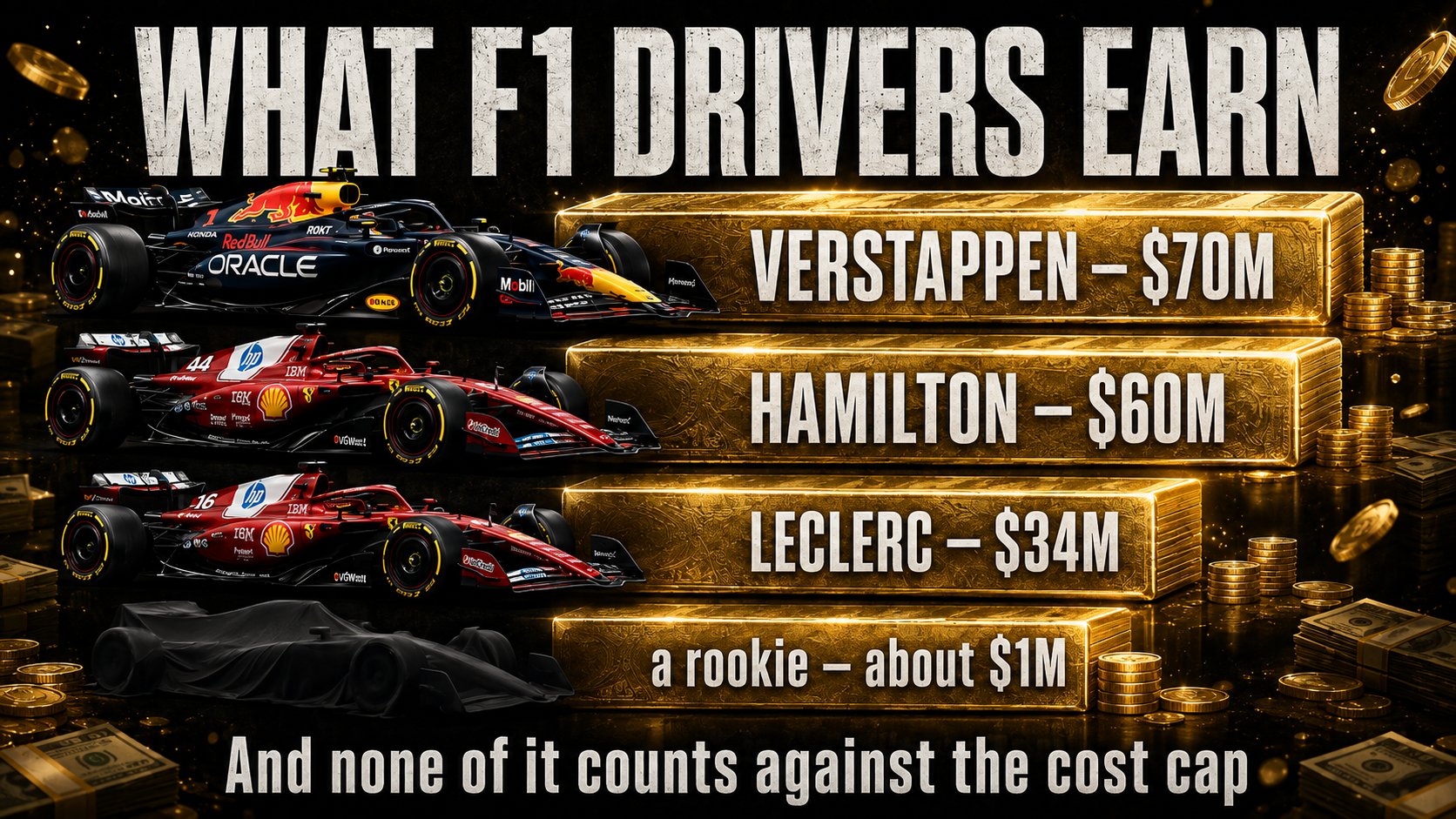
F1 driver salaries explained, from Max Verstappen's $70 million to a rookie's $1 million, why the very best earn so much more than the rest, and why none of it counts against the cost cap.
Formula 1 drivers are among the highest-paid athletes on the planet, and the gap between the top of the grid and the bottom is enormous. One driver can earn seventy times more than his rival in the garage next door. And here is the twist that makes it all possible: unlike almost every other cost in modern F1, driver pay is completely uncapped. Here is who earns what, and why.
The top of the grid
At the very top, the numbers are staggering. Max Verstappen is the best-paid driver on the grid, on a reported salary of around $70 million a year
, in his second season at Ferrari, is just behind on about
$60 million
. His team mate
Charles Leclerc
earns roughly
$34 million
, which means Ferrari alone pays its two drivers a combined figure not far off
$94 million
.
These three are outliers. They are the proven, generational talents, the drivers who can drag a car to results it has no business achieving, and teams pay a colossal premium to secure them.
The rest of the field
Below that top tier, the money drops off sharply and the field bunches together. Most of the grid earns somewhere between $2 million and $20 million a year, a very good living, but a different world from the superstars. At the bottom, rookies and lower-order drivers earn around $500,000 to $1 million, with the sport's minimum base salary now set at $1 million a year, which even a first-year driver is guaranteed. Across all eleven teams, F1 will spend around $324 million on driver salaries in 2026, the highest total in the sport's history.
The loophole: driver pay is outside the cost cap
This is the crucial piece. Since 2021, almost everything a team spends on making its car faster is limited by the cost cap. But driver salaries are completely exempt. A team can pay a driver seventy million dollars and not a cent of it touches their capped budget for designing and building the car.
That exemption turns driver pay into what the paddock calls "the ultimate flex". It is one of the few areas left where a rich team can simply outspend everyone, hoovering up the best talent while their car-development budgets are strictly controlled. It is also why the biggest single cheque many teams write every year is the one that does not count.
It's not just the salary
The headline salary is only part of a top driver's income. On top of their base pay, drivers earn performance bonuses, often paid per point scored, per win, or for a championship, which can add many millions in a good year. And the biggest stars earn enormous sums off the track, through personal sponsorship, endorsements and image rights. For a driver like Hamilton or Verstappen, the off-track earnings can rival or exceed the on-track salary, which is how their total incomes and net worths climb far beyond even those huge headline figures.
Why the best are worth it
It can look absurd to pay one driver seventy million dollars. But in a sport decided by hundredths of a second, a driver who is reliably a few tenths of a lap faster than the alternative is worth an enormous amount. Those tenths turn into points, points turn into a higher finish in the constructors' championship, and that finish turns into tens of millions in prize money, plus the sponsors and prestige that come with winning. A great driver does not just win races; they pay for themselves. That is the cold logic behind the biggest salaries in world sport.
Driver salaries sit outside the cost cap, and that single exemption shapes the entire driver market.
A team is limited to roughly $215 million a season for chassis and car development in 2026. Driver pay is not counted against it, and neither are the three highest-paid staff members. So a team can pay a driver whatever it can afford without losing a single dollar of development budget.
If salaries were inside the cap, every driver contract would be a direct trade against upgrades, and the top of the market would collapse overnight. The exemption is why the biggest names can command what they do while their teams simultaneously complain about being unable to develop the car. Those are two different pots of money. The cap itself is explained in the F1 cost cap.
Why a team pays it anyway
The money looks irrational until you look at what a driver is actually being bought for.
Prize money follows the constructors' championship, where both cars score, and a single position in that table is worth millions. A driver who reliably converts a good car into points is defending the team's entire budget for the following season, which is covered in how F1 prize money works.
There is also a harder number behind it. We measured every team-mate pairing in qualifying and found gaps ranging from 20-0 clean sweeps down to 0.035%, about three hundredths of a second. In a sport where a championship was decided by two points in 2025, a driver who is consistently a tenth quicker than the alternative is worth a great deal more than their salary line suggests. The comparison is in F1 team-mate qualifying head to head.
Watch what they are being paid for
The performance that justifies these numbers happens in about ninety minutes on a Sunday.
The Formula Dream app runs a live Dashboard through every session: every car on the circuit map, and a timing tower with lap times, gaps, intervals, tyre compound and age, plus flag and safety car alerts the moment race control calls them. You also get live driver radio as it is broadcast, and every FIA document of the weekend as it is published, including the stewards' decisions that decide results.
Free, no subscription, no ads, independent. Not affiliated with Formula 1.
Max Verstappen, on a reported salary of around $70 million a year, followed by Lewis Hamilton at about $60 million.
How much do F1 drivers earn?
It ranges hugely. The top three earn from around $34 million up to $70 million, most of the grid earns between $2 million and $20 million, and rookies earn around $1 million, the sport's minimum base salary.
Do driver salaries count against the F1 cost cap?
No. Driver salaries are completely exempt from the cost cap, so a team can pay a driver any amount without it affecting their capped car-development budget.
Do F1 drivers earn more than their salary?
Yes. On top of base pay they earn performance bonuses (often per point or per win), and the biggest stars earn huge additional sums from personal sponsorship and endorsements off the track.
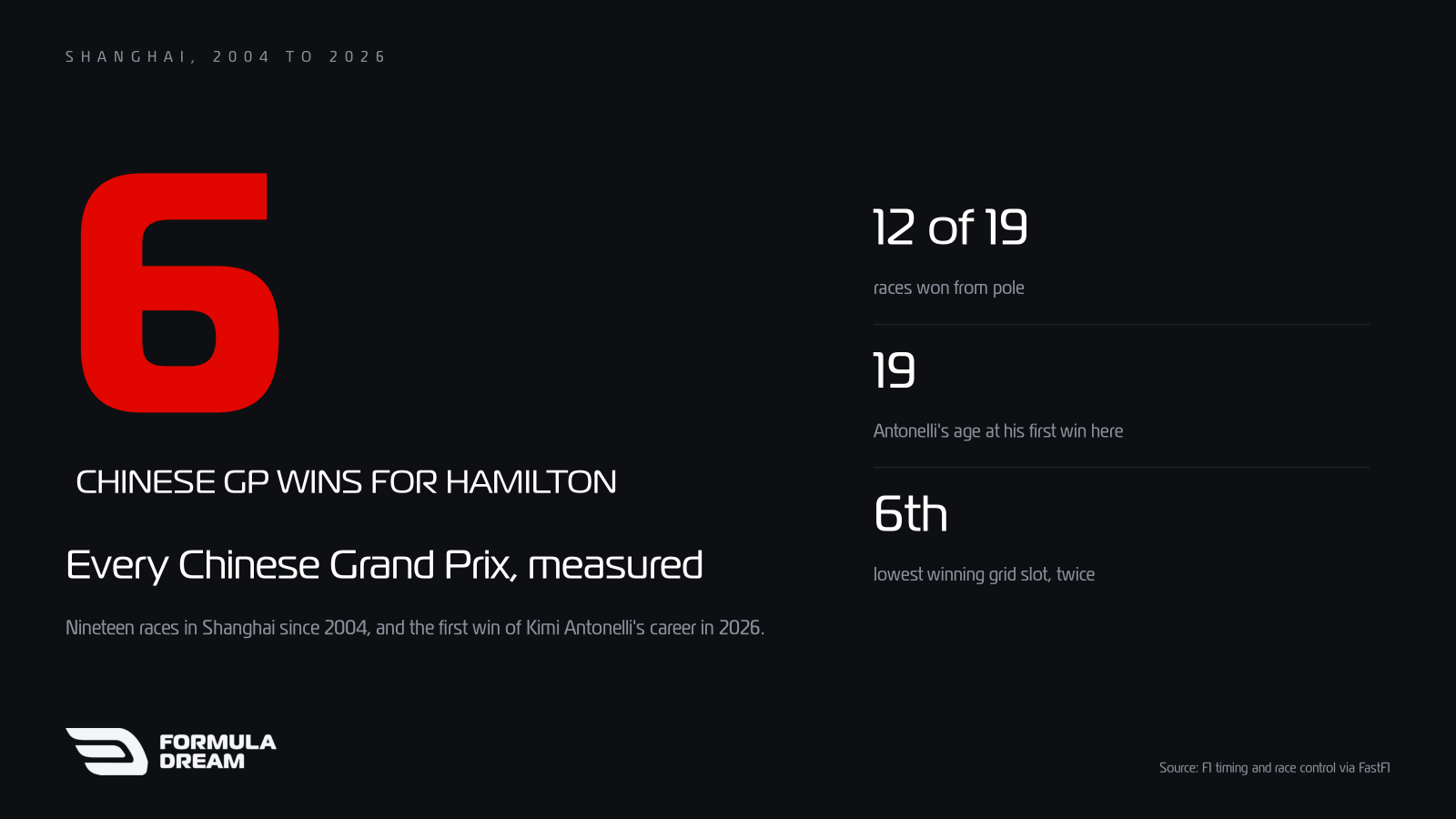
Nineteen Chinese Grands Prix have been held in Shanghai since 2004. Lewis Hamilton won six, pole won twelve, and in 2026 Kimi Antonelli took the first win of his career there, at 19, with Hamilton on the podium for Ferrari for the first time. Every winner, grid slot and safety car, measured.