Insights, deep-dives & race intel
Filtered by #explained · clear

What does box box mean in F1? We counted every pit call in 37,359 radio messages
Everyone knows the phrase as box box box. The radio says otherwise: nearly three quarters of real pit calls say the word exactly once, and the busiest session for pit calls is not the race.
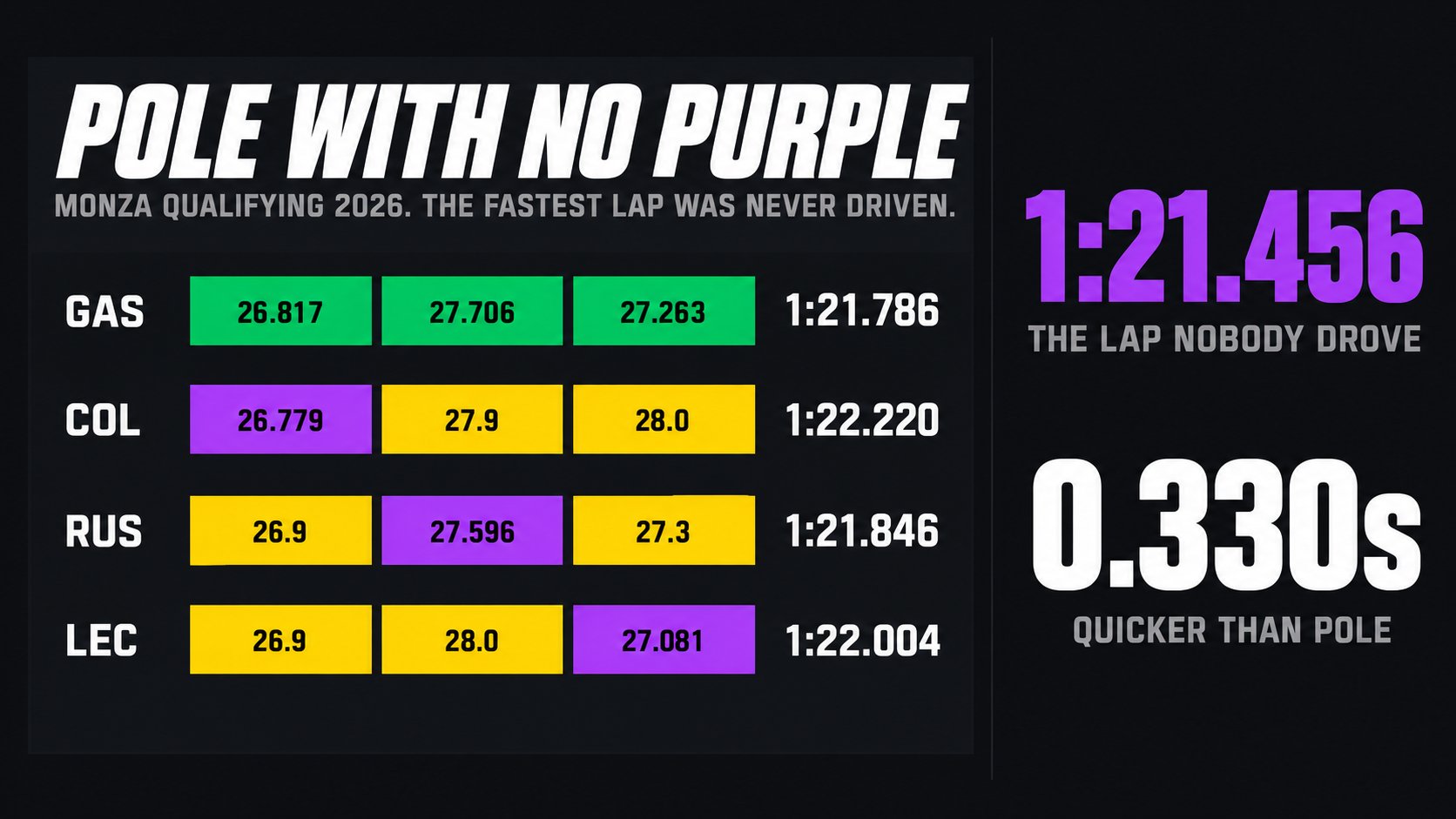
F1 sector colours: what purple, green and yellow actually mean
Three colours on a timing screen carry more information than the lap time does, and the Monza pole lap is the cleanest proof of it: Gasly took pole without setting a single fastest sector.
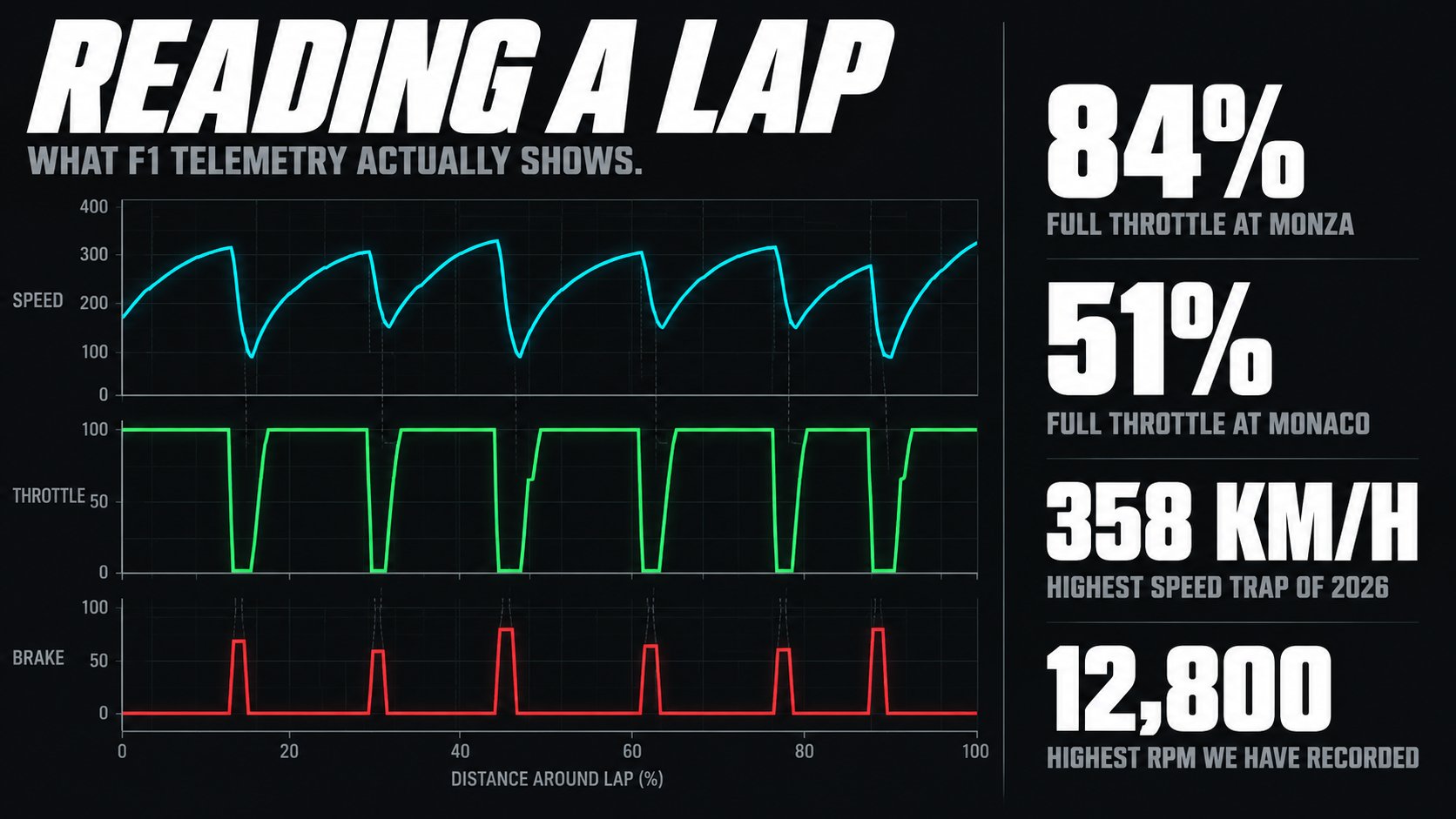
F1 Telemetry Explained: What the Data Actually Shows
Speed, throttle, brake and gear traces from a real F1 car, what each channel tells you, and the four traps that make most telemetry comparisons wrong.
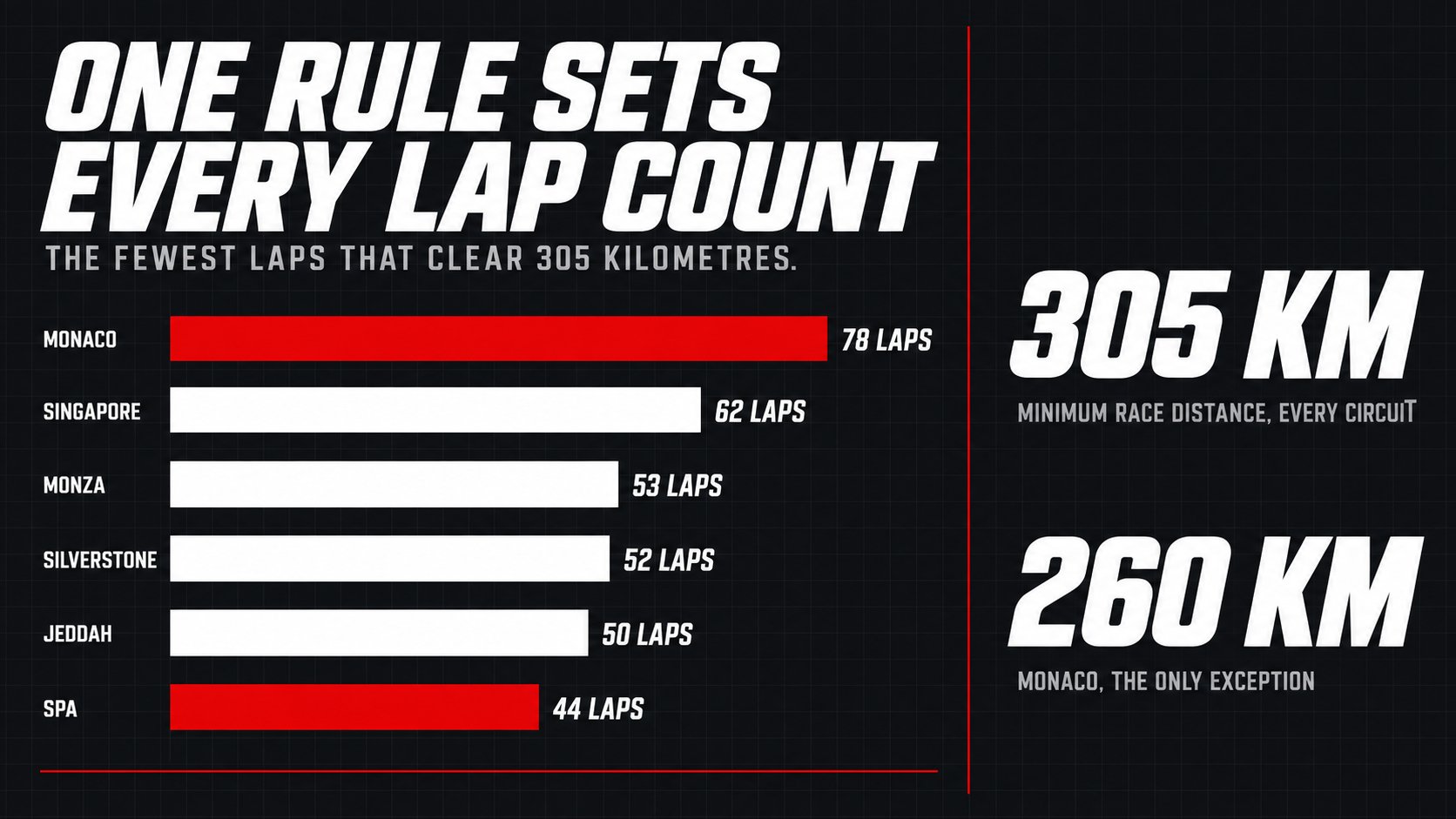
How Many Laps Is an F1 Race? Every 2026 Circuit
Monaco has the most laps of any race and the shortest distance. Spa has the fewest laps and one of the longest. One rule explains both, and here is every 2026 round.

Retired F1 Numbers: There Is Only One
Formula 1 has retired exactly one number, and it is 17. The others people assume are gone, including 27 and 13, are all still available.
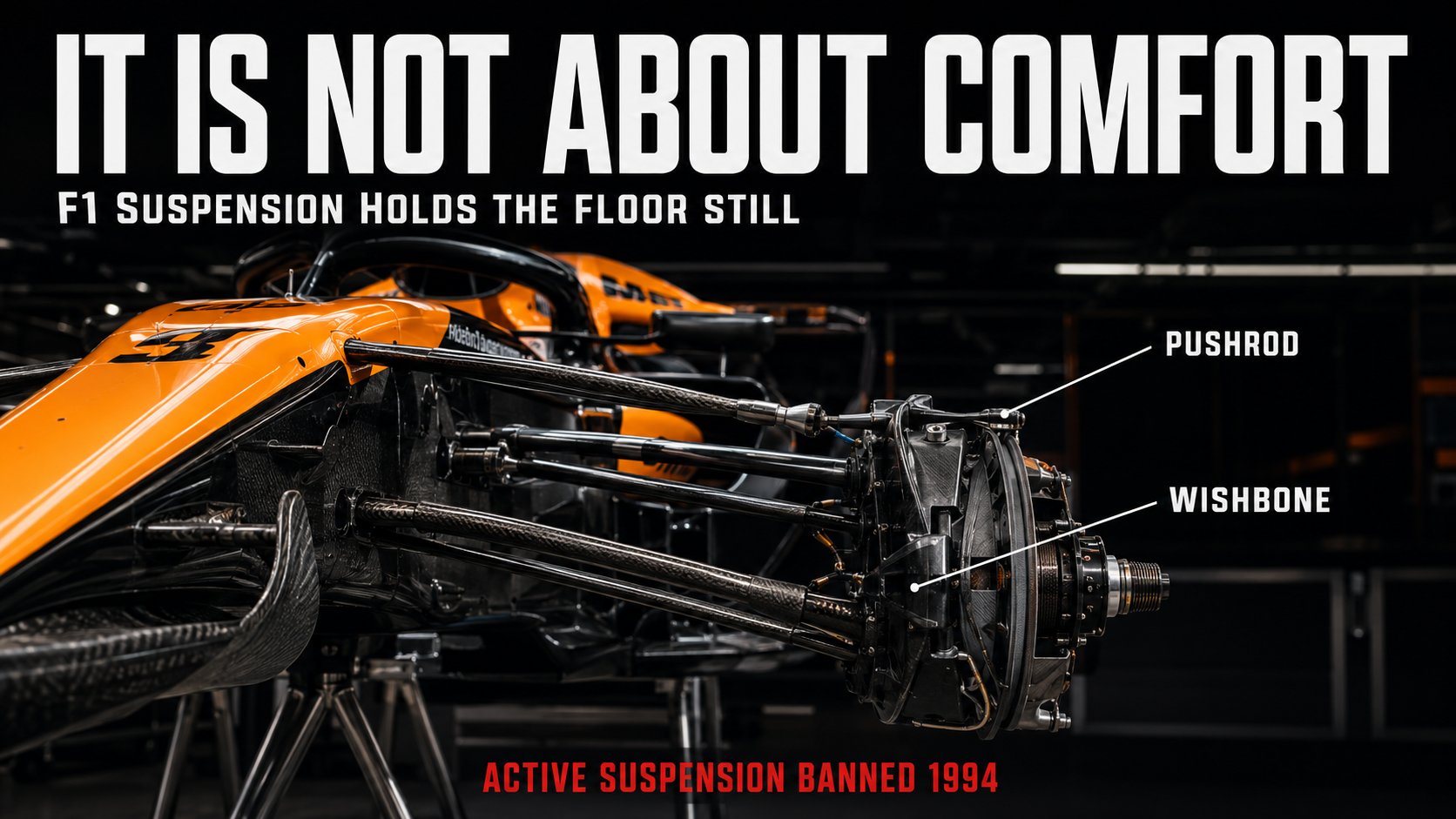
F1 Suspension Explained: It Exists to Serve the Floor
F1 suspension is not really about ride comfort or mechanical grip. Its main job is holding the floor at a constant height so the aerodynamics keep working.

How F1 Teams Actually Use Simulators
A team simulator is a lidar-scanned virtual test track on a motion platform that responds in milliseconds. Its value depends entirely on one unglamorous thing: correlation.

Why F1 Teams Barely Get to Test, and What They Do Instead
Track time is rationed to a handful of hours a year, one car at a time. Simulator time is unlimited. That single asymmetry explains how modern F1 teams are built.

How F1 Moves a Grand Prix Around the World
Around 1,200 tonnes of freight, up to seven 747s an event, 300 trucks across Europe and 120 ocean containers in permanent circulation. The hardest job in the sport.

F1's Heat Hazard Rule and the Cooling Vests Drivers Don't Want
Above 31°C the FIA declares a Heat Hazard and every car must carry a cooling system. Drivers can refuse to wear the vest, and the rule makes sure it costs them nothing.
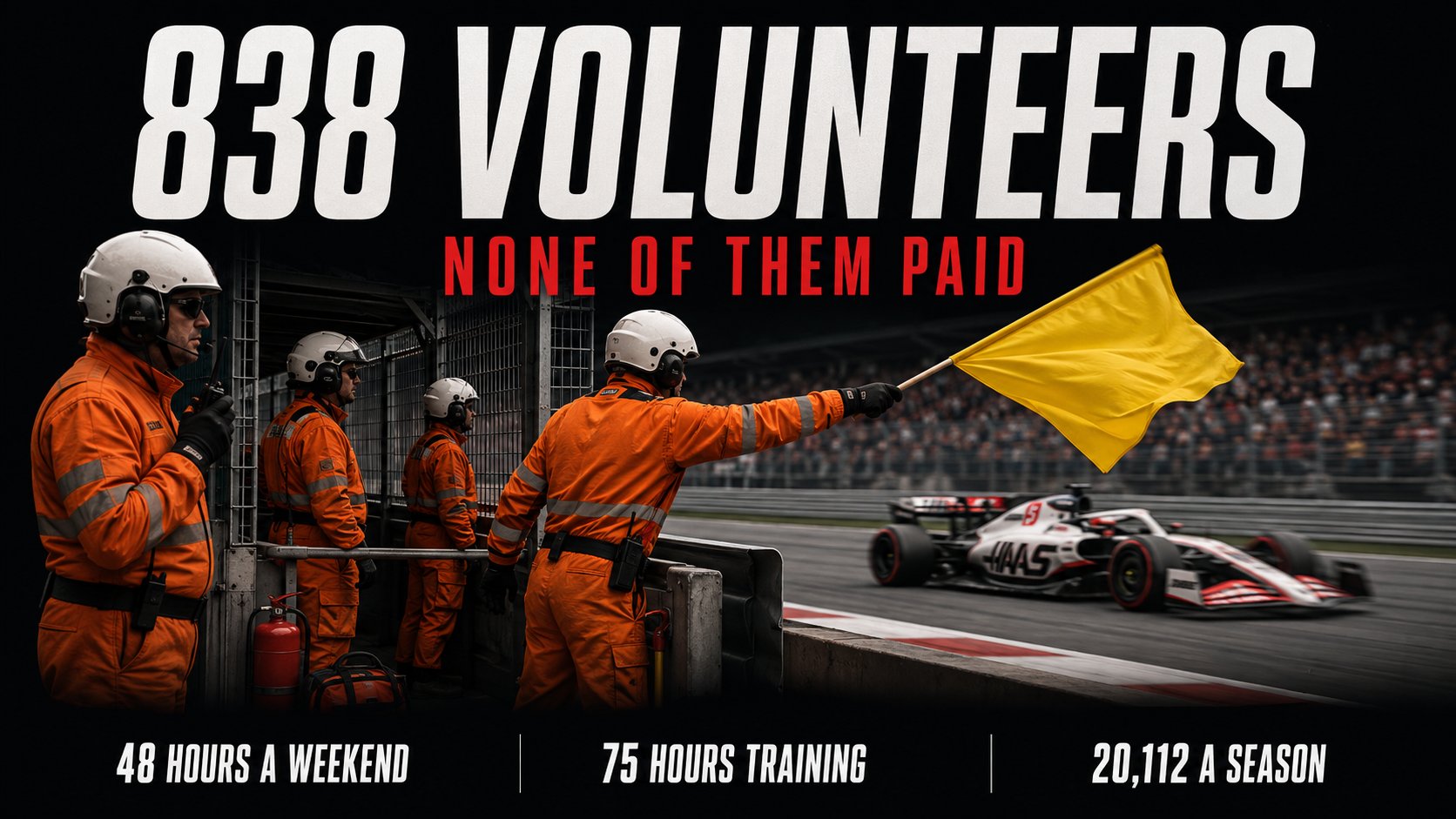
F1 Marshals: The 838 Unpaid People Who Run Every Grand Prix
An FIA report put numbers on it. It takes an average of 838 volunteers to run a Grand Prix, they train 50 to 75 hours a year, and two thirds take annual leave to be there.
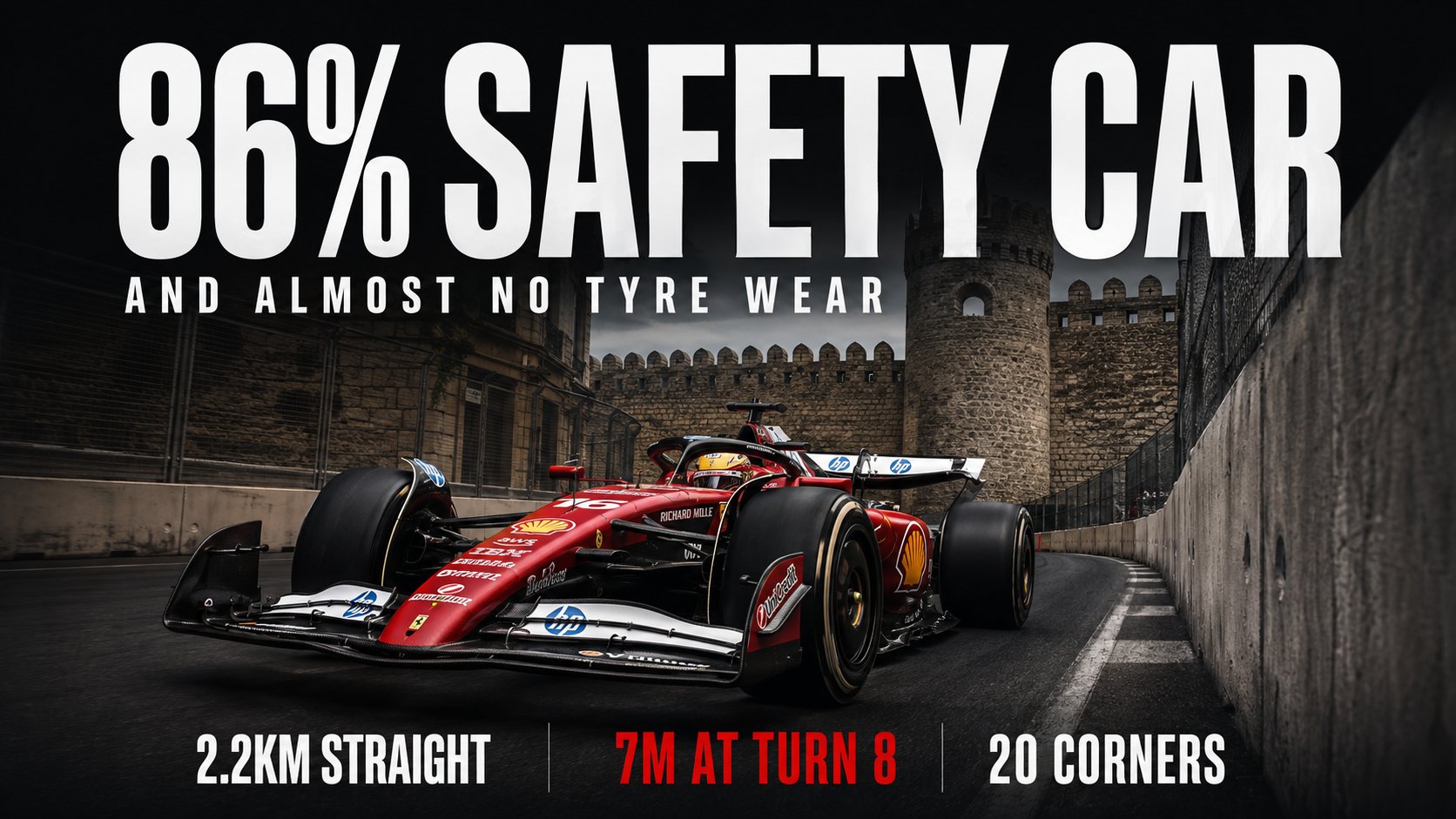
Why Baku Produces the Racing It Does
A 2.2km straight, a seven metre gap between walls, near-zero tyre wear and an 86% safety car rate. Baku's chaos is not luck, it is the direct product of four things.