Sepang Returns: The Bahrain GP in Malaysia, Explained
Sepang returns: the Bahrain Grand Prix that is being held in Malaysia
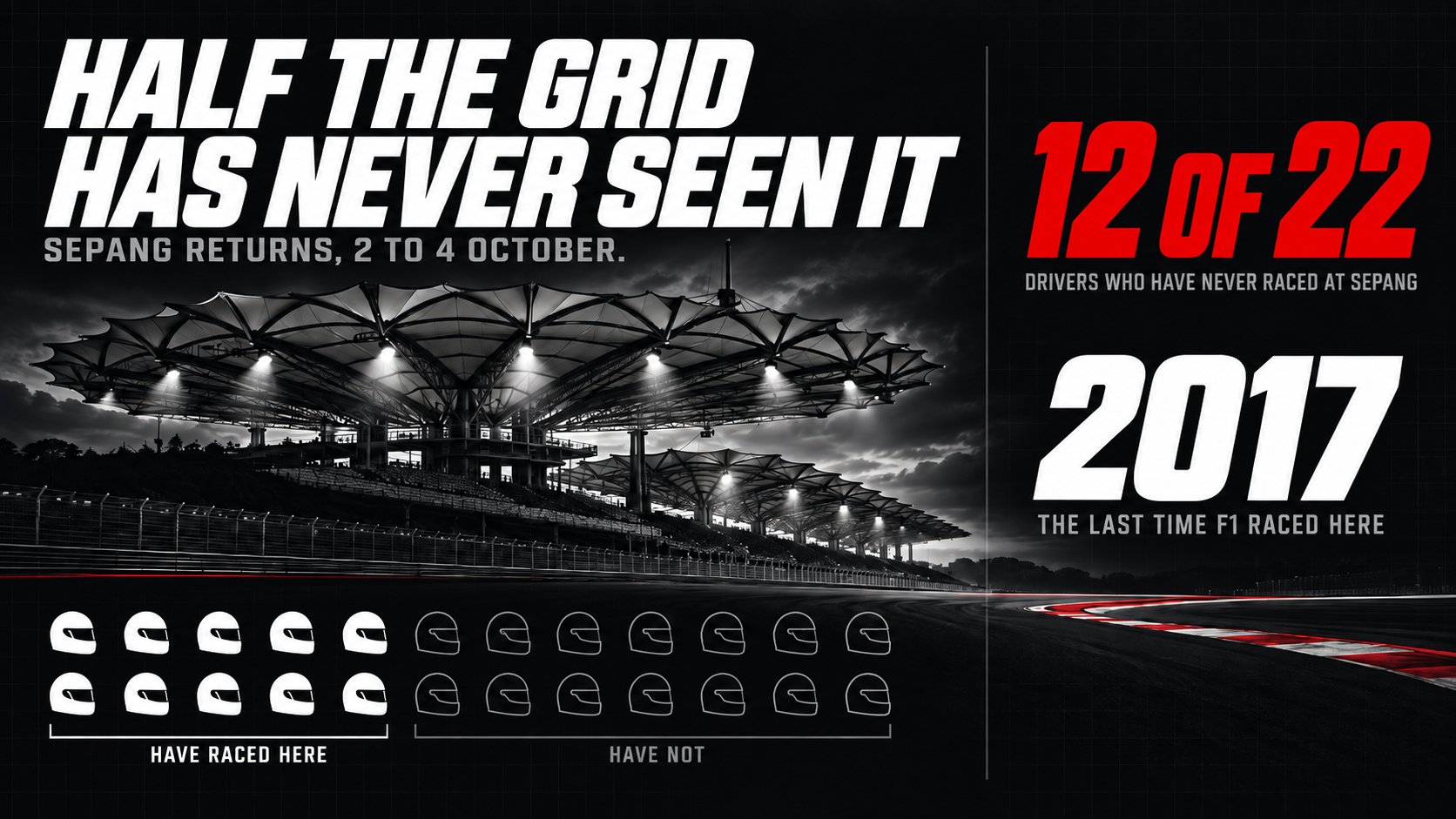
The 2026 Bahrain Grand Prix is being run at Sepang, 6,000 km from Bahrain. More than half the current grid has never turned a lap there, and the man who won the last one is still racing.
On 2 October, Formula 1 returns to Sepang for the first time since 2017. The race will be called the Bahrain Grand Prix, and it will be held about 6,000 kilometres from Bahrain.
That is not a mistake. It is one of the stranger entries any Formula 1 calendar has carried, and it produces a genuinely unusual weekend: twelve of the twenty two drivers on the current grid have never raced at this circuit, while the man who won the last race here is still competing.
Why the Bahrain Grand Prix is in Malaysia
The 2026 Bahrain Grand Prix was originally scheduled for the Bahrain International Circuit in April. It was cancelled, along with the Saudi Arabian Grand Prix, following the outbreak of the 2026 Iran war.
Rather than lose the round, Formula 1, the FIA and the governments of Bahrain and Malaysia agreed to move it. Sepang takes the date, the Bahrain Grand Prix keeps its name, and the event runs officially as the Formula 1 Gulf Air Bahrain Grand Prix in Malaysia. It holds its existing calendar slot between Azerbaijan and Singapore, on 2 to 4 October, and the rest of the 2026 calendar is unchanged.
So the trophy, the title and the promoter belong to one country and the asphalt belongs to another. There is no modern precedent for it.
Ten of the twenty two have driven here. Twelve have not.
We checked the 2017 Malaysian Grand Prix entry list against the grid that raced at Monza. Ten of the current drivers were at Sepang for its last Formula 1 race:
Driver
2017 finish
Team then
Max Verstappen
**1st**
Red Bull
Lewis Hamilton
2nd
Mercedes
Valtteri Bottas
5th
Mercedes
Sergio Perez
6th
Force India
Lance Stroll
8th
Williams
Esteban Ocon
10th
Force India
Fernando Alonso
11th
McLaren
Pierre Gasly
14th
Toro Rosso
Nico Hulkenberg
16th
Renault
Carlos Sainz
19th
Toro Rosso
Caption: The ten drivers on the 2026 grid who raced the 2017 Malaysian Grand Prix, with their finishing positions.
The twelve who have never raced a Formula 1 car at Sepang: Kimi Antonelli, George Russell, Lando Norris, Oscar Piastri, Charles Leclerc, Arvid Lindblad, Franco Colapinto, Yuki Tsunoda, Gabriel Bortoleto, Liam Lawson, Oliver Bearman and Alexander Albon.
Read that list again. It contains the championship leader, the man second in the championship, both McLarens and a Ferrari. The four drivers with the most points after Antonelli include three who have never seen this circuit in a Formula 1 car, while the drivers who know it best are mostly in the midfield.
That does not mean the midfield will win. It does mean Friday is worth more than usual, in a way we also measured for Madrid's new circuit.
Max Verstappen has a particular claim on the place. He won the last Formula 1 race held here, from third on the grid, with Hamilton second at 12.770 seconds.
What Sepang actually is
Length
5.543 km
Corners
15, ten of them right-handers
2017 race distance
56 laps, 310.4 km
F1 lap record
1:34.080, Sebastian Vettel, Ferrari SF70H, 2017
Last F1 race
1 October 2017
The 305 kilometre minimum race distance rule has not changed, and at 5.543 km a lap it still produces 56 laps, since 55 would come to 304.9 km and fall just short. We worked through how that rule sets every lap count on the calendar.
Sepang was designed by Hermann Tilke and opened in 1999, and it is one of the wider circuits Formula 1 visits, with two long straights separated by a hairpin and a sequence of fast, open corners. Its reputation rests on two things: heat and rain. It sits close to the equator, races have repeatedly been interrupted by tropical downpours that arrive within minutes, and the combination of humidity and track temperature has historically been among the hardest physical tests of the season.
That heat is not a footnote. It is the reason Formula 1 now has a formal heat hazard procedure and driver cooling systems, which we covered in F1 heat hazards and cooling vests. Moving an entire Grand Prix 6,000 km at a few months' notice is its own problem, and the scale of what travels to each race is in how F1 logistics work.
Why it left in 2017
Not for sporting reasons. The Malaysian Grand Prix was dropped after 2017 because of falling attendance and the cost of hosting, with the government citing an annual fee running to hundreds of millions of ringgit. The 2017 race was announced in advance as the country's farewell.
Nine years later it returns for one race, because a different race could not be held.
What we cannot tell you, and why
Two honest gaps, stated up front rather than papered over.
We have no team radio from Sepang. Our team radio archive covers 2018 onward, and Formula 1 left Sepang in 2017. There is not a single message in it from this circuit. That will change on 2 October and not before.
We are not going to compare 2017 lap times with 2026 ones. Vettel's 1:34.080 was set by a car built to a completely different set of regulations, on different tyres, with different aerodynamics and a different minimum weight. Comparing it with anything a 2026 car does would produce a number that looks meaningful and is not. The 2026 cars are slower than the generation immediately before them, never mind the 2017 machinery, so the direction of any such comparison is not even obvious. When Sepang has a 2026 lap time, we will have something worth measuring.
When it happens
The Bahrain Grand Prix in Malaysia runs from 2 to 4 October 2026, round 16 of the season, between Azerbaijan and Singapore.
Follow the return with the data on screen
For twelve drivers this is a first visit, and for a circuit that has been off the calendar nine years there is no current reference for anybody.
The Formula Dream app runs a live Dashboard through every session, currently in beta: every car on the circuit map, and a timing tower with lap times, gaps and intervals, tyre compound and age, plus flag and safety car alerts as race control calls them. At Sepang the one to watch is the weather, because races here have been decided by rain arriving inside a lap. It also carries live driver radio as it is broadcast with the transcript alongside it, which will be the first team radio ever recorded at this circuit in our archive, and every FIA document of the weekend as the stewards publish it.
Free, no subscription, no ads, independent. Not affiliated with Formula 1.
The race was originally scheduled for the Bahrain International Circuit in April and was cancelled, with the Saudi Arabian Grand Prix, after the outbreak of the 2026 Iran war. Formula 1, the FIA and the Bahraini and Malaysian governments agreed to relocate it to Sepang rather than lose the round. It keeps the Bahrain name.
When is the 2026 Bahrain Grand Prix at Sepang?
2 to 4 October 2026, round 16 of the season, in its original calendar slot between the Azerbaijan and Singapore Grands Prix.
When did F1 last race at Sepang?
1 October 2017, the Malaysian Grand Prix. Max Verstappen won it for Red Bull from third on the grid, ahead of Lewis Hamilton and Daniel Ricciardo.
Why did Malaysia lose its Formula 1 race?
Cost and attendance rather than anything sporting. Hosting fees had risen while ticket sales fell, and the 2017 race was announced in advance as the country's last.
How long is the Sepang circuit?
5.543 km with 15 corners, ten of them right-handers. The 2017 race ran 56 laps for 310.4 km, and the 305 km minimum distance rule still produces 56 laps at that length.
What is the F1 lap record at Sepang?
1:34.080, set by Sebastian Vettel in a Ferrari SF70H during the 2017 Malaysian Grand Prix. It was set under a different set of technical regulations and is not comparable with 2026 lap times.
Driver entry lists were taken from official 2017 and 2026 session data. Circuit and calendar facts were verified against published sources.
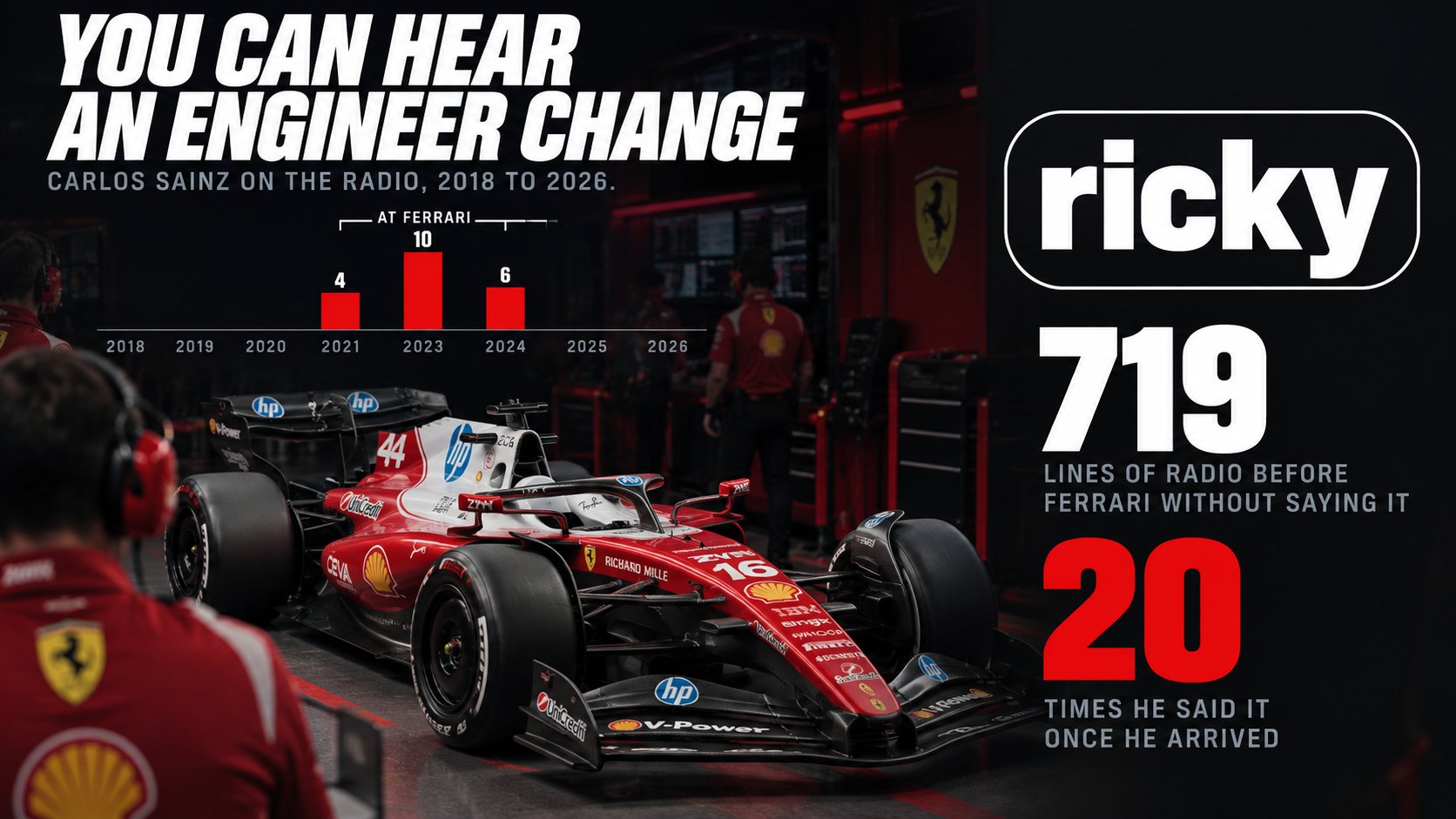
You can watch a race engineer change hands in the radio archive
Drivers address their race engineer by first name, so the archive quietly records who was in whose ear. Two of those pairings begin and end inside our data, and you can see both happen.