F1 Tyre Compounds Explained: Soft, Medium, Hard and the C1-C5 Range
F1 tyre compounds explained, what soft, medium and hard actually mean, how Pirelli's C1 to C5 range works, the colours, the wet tyres, and why the choice decides races.
F1 tyre compounds are the different rubber recipes a car can run, trading grip against durability. A softer compound gives more grip and a faster lap but wears out quickly; a harder one lasts far longer but is slower. Choosing between them, and when to switch, is one of the biggest strategic decisions in a Grand Prix.
Formula 1 uses the British spelling, tyres. American coverage writes tires. They are the same thing, and this guide uses the two interchangeably.
The dry range: C1 to C5
Pirelli, F1's sole tyre supplier, makes a range of dry-weather (slick) compounds numbered by hardness. For 2026 that range is five compounds, from the hardest, C1, to the softest, C5. Pirelli dropped the even-softer C6 that had appeared in 2025 after it failed to offer a meaningful step over the C5.
Compound
Hardness
Typically used at
C1
Hardest, most durable
High speed, heavy load, abrasive surfaces
C2
Hard
High-severity circuits
C3
Middle of the range
The all-round option
C4
Soft
Lower-severity circuits
C5
Softest, grippiest
Smooth, low-severity tracks and street circuits
Pirelli's 2026 dry compound range. C6 was dropped after 2025.
Soft, medium and hard: the colours
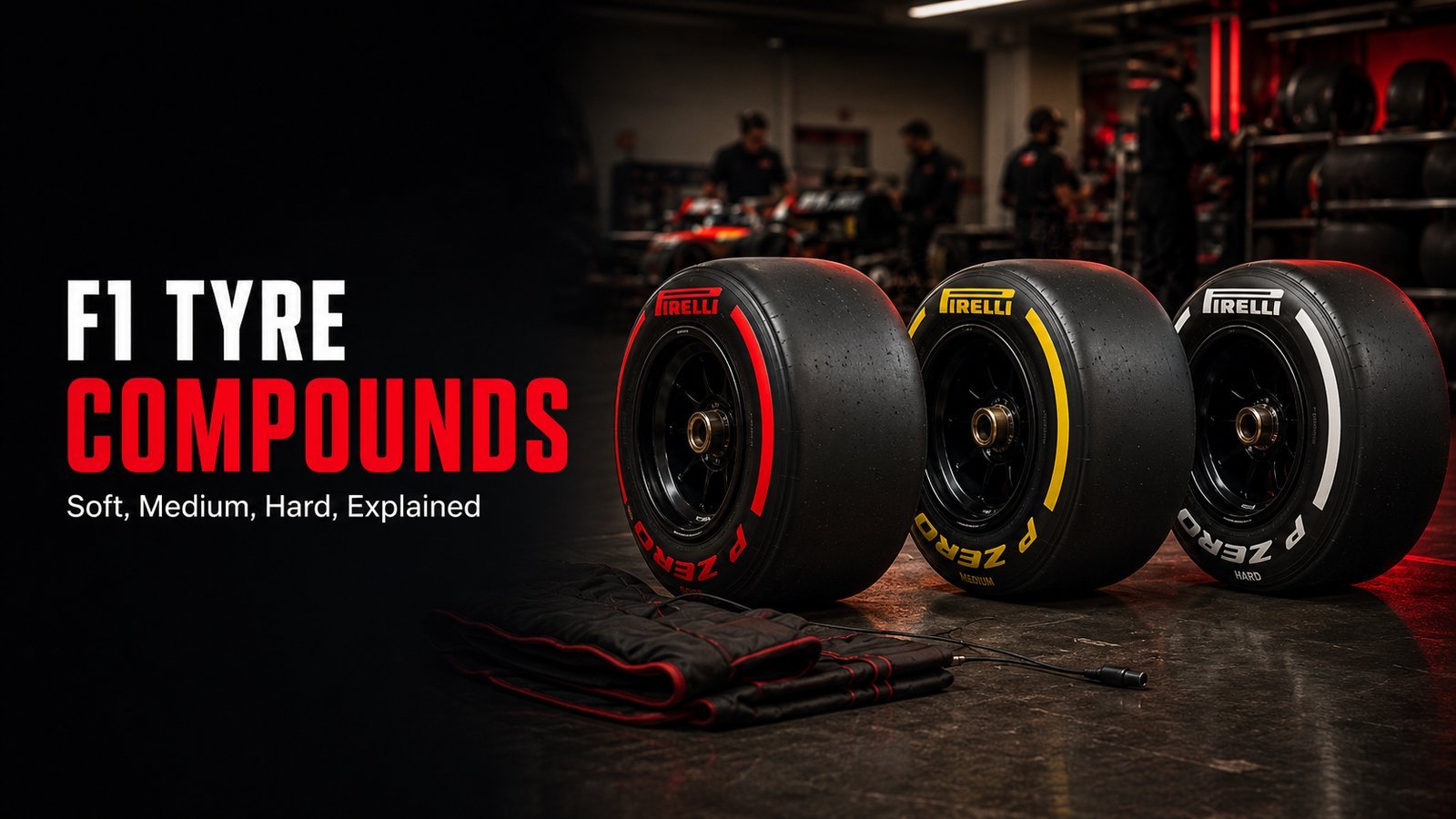
Here is the part that confuses people. At any given race, you never see C1 to C5 on the cars. Pirelli picks three of the five compounds for that weekend and re-labels them, relative to each other, as Hard, Medium and Soft, marked by a coloured band on the sidewall:
Race label
Sidewall colour
Hard
White
Medium
Yellow
Soft
Red
Intermediate
Green
Full wet
Blue
The five tyres you see at a race weekend and their sidewall colours.
The key word is relative. The "hard" tyre at a soft-tyre street race might be a C3, while the "hard" at an abrasive high-load track might be a C1. The colours only tell you which of the three is hardest, medium and softest that weekend, not the absolute compound.
At each weekend Pirelli picks three of the five slick compounds and labels them Hard, Medium and Soft, plus the intermediate and full wet for rain.
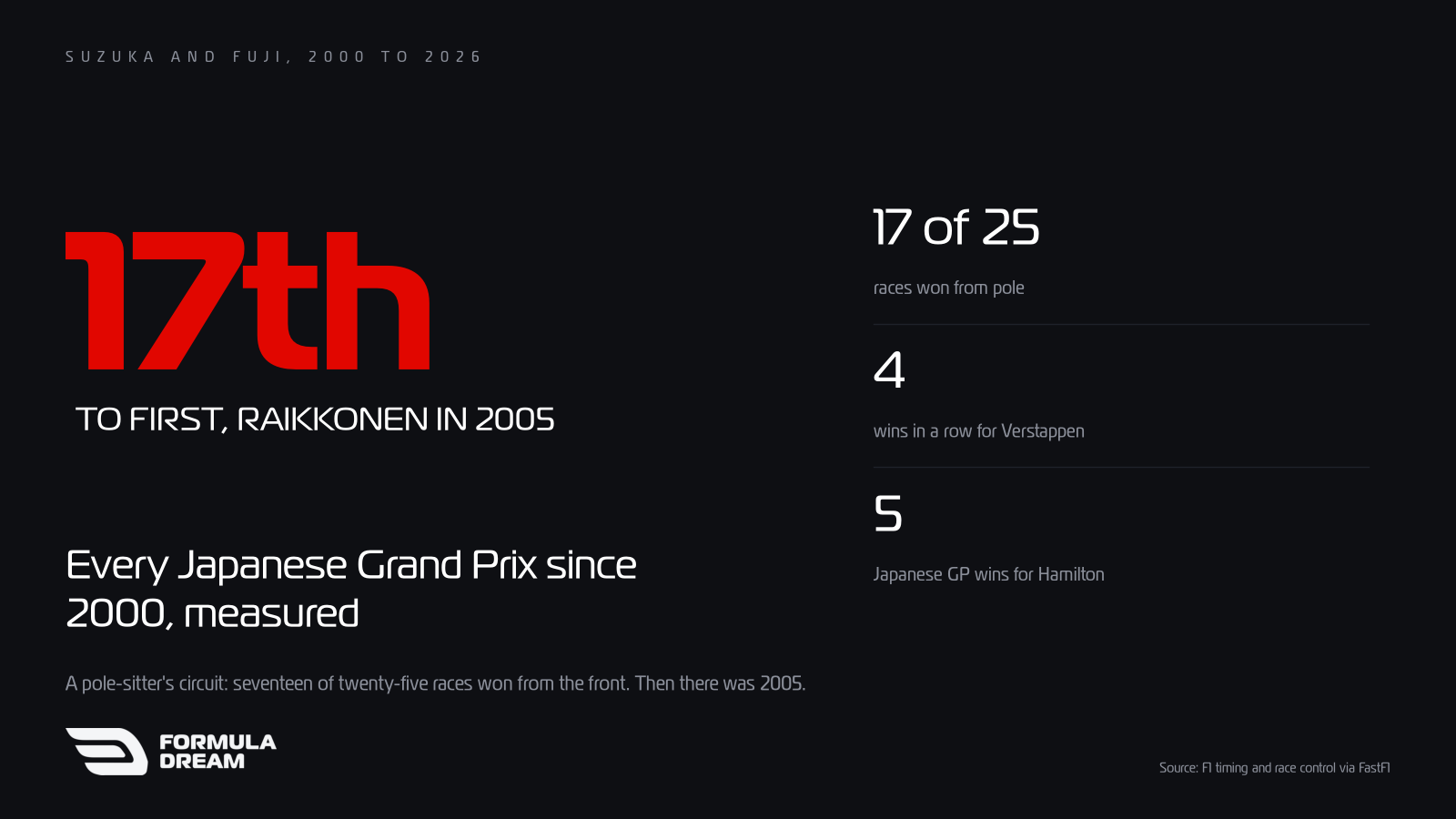
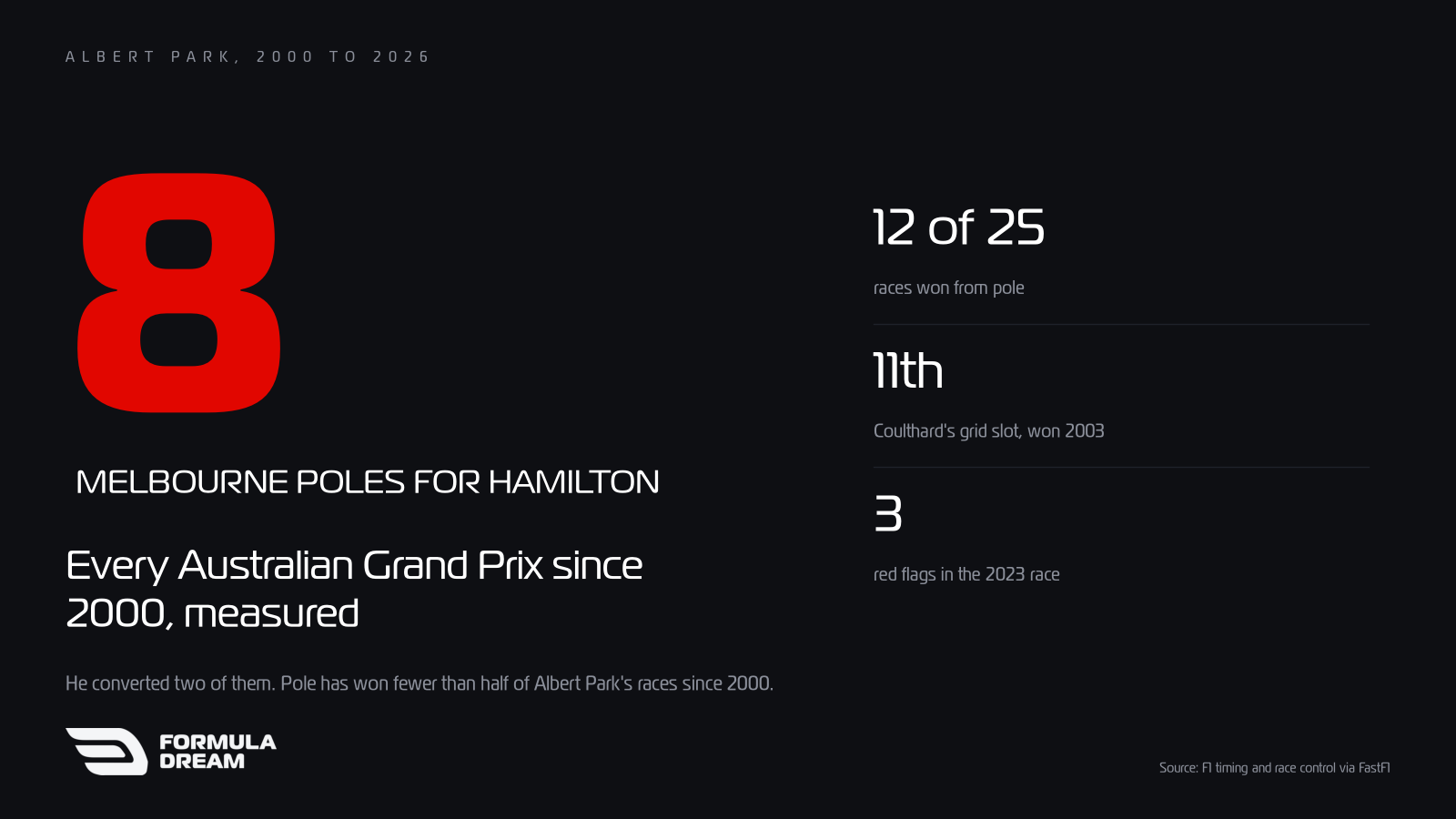
Which three appear depends on the track. For the smooth, low-grip season-opening Australian Grand Prix, Pirelli brings its three softest compounds to help the cars find grip; a high-energy circuit that pours load through the tyres, like Suzuka or Silverstone, instead leans on the hard end of the range so the rubber survives.
The trade-off that decides races
Every tyre choice is the same gamble in different clothes: grip now versus grip later.
Soft tyres switch on fast and deliver the quickest single lap, which is why they dominate qualifying, but they lose performance soonest in a race.
Hard tyres take longer to reach their working temperature and feel slower, but they let a driver run a long, consistent stint.
Medium is the compromise, often the smart race tyre.
A team's whole strategy, when to pit, how many stops, whether to attack or defend, flows from how long each compound will last against how much lap time it offers. That is what the undercut, the overcut, and every pit-wall argument are really about, and it only works if you can predict how fast each compound will degrade.
Wet-weather tyres
When it rains, slicks are useless and two grooved tyres come out:
Intermediate = green. For a damp or drying track, or light rain. The most-used wet tyre, because conditions are so often in between.
Full Wet = blue. For heavy rain and standing water, with deep grooves that clear a large amount of water per second to fight aquaplaning.
How teams actually use them
Pirelli brings the three nominated dry compounds to each race, plus intermediates and wets. In a dry race, the rules require every driver to use at least two different dry compounds, which is why you rarely see a no-stop race, someone has to switch at some point. Get the timing of that switch right and you win the race in the pit lane; get it wrong and you spend the afternoon stuck behind slower cars.
The narrower tyres coming in under the 2026 regulations are part of the same push to make the cars lighter and easier to race wheel to wheel.
A red flag rewrites all of that in one go, because a suspended race lets teams change tyres in the pit lane for free and it counts as the mandatory stop. Monza 2026 is the clearest example we have measured. The race was red-flagged on lap 3 and every car took a new set, which turned the compound choice into an open decision with fifty laps left rather than a pit window under pressure. Most of the field fitted the hard and ran to the flag. Antonelli, Hamilton, Tsunoda and Bortoleto fitted the medium.
It split the result. Antonelli won on a second set of mediums, averaging 1:24.663 over the final stint. Hamilton, on the same compound, averaged 1:25.927 and finished sixth, and you can hear what he made of it: around lap 35 his engineer came on the radio with "this tire is terrible". That clip and every other message from the weekend is in the team radio archive, with the audio next to the transcript.
The compound is the opportunity. What a team does with it is a separate question.
Which compounds actually get raced
The C1 to C5 range is the theory. Here is what it produces on Sunday.
We counted the compound on every race lap of the 2026 season so far, 14,095 laps across twelve rounds.
Compound
Race laps
Share
Hard
6,619
47.0%
Medium
5,036
35.7%
Soft
2,401
17.0%
Every race lap of the 2026 season by compound, from F1 timing data. Wet and intermediate laps excluded from the percentages shown, at 0.1% of the total.
The hard tyre does nearly half the racing. The soft does one lap in six.
That is close to the opposite of the impression you get from watching qualifying, where the soft is the only compound that matters. The soft exists to set one fast lap. The hard exists to get to the end.
The per-race split shows how far teams will go to avoid it:
Suzuka: the soft did not complete a single race lap. Not one, in 1,107 laps of running.
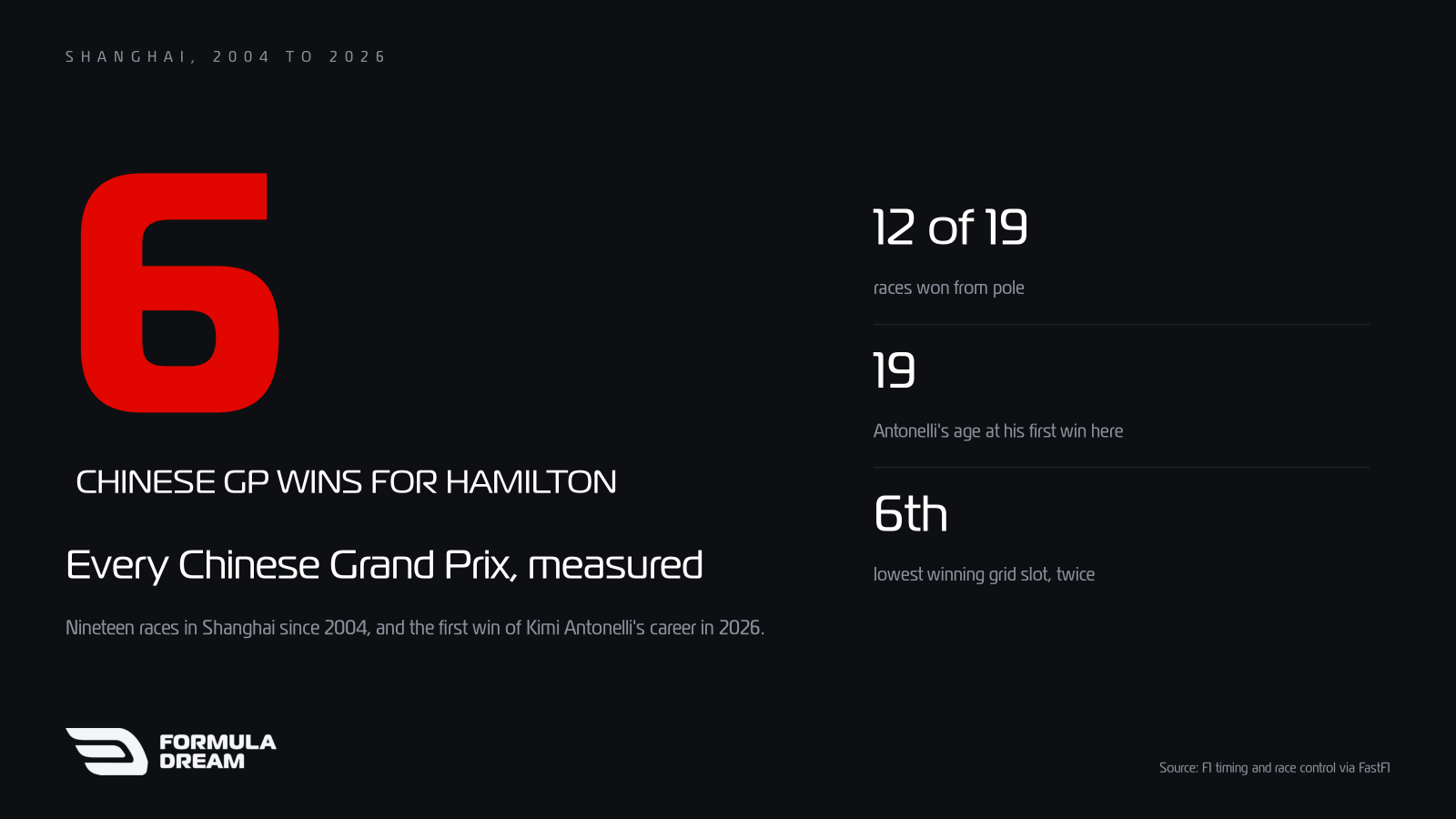
Shanghai: 2%. Effectively the same answer.
Montreal is the exception that proves it, at 42% soft and only 6% hard, on a circuit whose surface is smooth and whose race is short enough to gamble.
Monaco is the most balanced race of the year, at 45% medium, 28% soft and 27% hard, because track position matters more than tyre life when overtaking is close to impossible.
So a compound choice is really a choice about how much of the race you intend to spend defending. What each lap of tyre age actually costs, measured across hundreds of stints, is in F1 tyre age.
See which compound is on which car
Compound choice is invisible on a broadcast unless someone tells you.
The Formula Dream app runs a live Dashboard through every session: every car moving on the circuit map, and a timing tower with lap times, gaps and intervals, tyre compound and age, pit counts and positions gained or lost. It is the same information these measurements come from, arriving live. You also get live driver radio as it is broadcast, and every FIA document of the weekend as it is published.
Free, no subscription, no ads, independent. Not affiliated with Formula 1.
Pirelli's dry range for 2026 runs from the hardest, C1, to the softest, C5. At each race three of them are chosen and labelled Hard, Medium and Soft, plus intermediate and full-wet tyres for the rain.
What do the tyre colours mean in F1?
On the dry tyres, white is the hard compound, yellow is medium, and red is soft. Green is the intermediate (wet) tyre and blue is the full wet.
What is the difference between soft and hard tyres?
Soft tyres have more grip and are faster over a single lap but wear out quickly. Hard tyres have less grip and are slower but last much longer, so they suit long stints.
Do F1 drivers have to change tyres?
In a dry race, yes, every driver must use at least two different dry compounds, so at least one pit stop is required. In a wet race that rule does not apply.
Are the 2026 F1 tyres different?
The compound range is C1 to C5 (Pirelli dropped the 2025 C6), and the tyres themselves are narrower under the 2026 regulations to help make the cars more agile.
Nineteen Chinese Grands Prix have been held in Shanghai since 2004. Lewis Hamilton won six, pole won twelve, and in 2026 Kimi Antonelli took the first win of his career there, at 19, with Hamilton on the podium for Ferrari for the first time. Every winner, grid slot and safety car, measured.