Insights, deep-dives & race intel
Filtered by Guides · clear
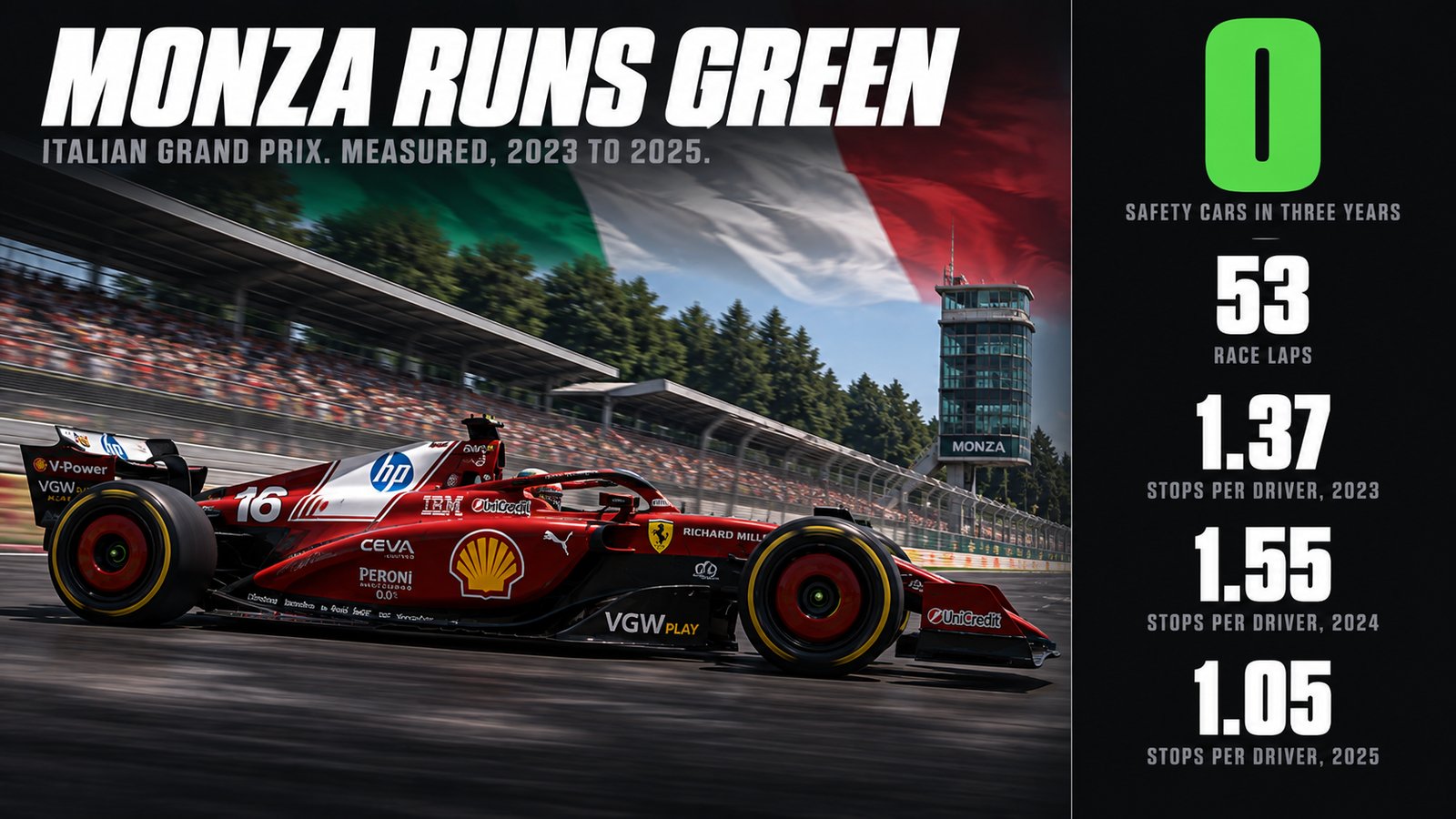
Italian GP Race Preview: What Friday's Data Says About Sunday
Ferrari topped Friday on mediums, Mercedes had the race pace, and Monza has not seen a safety car in three years. What the measured data says about the race.
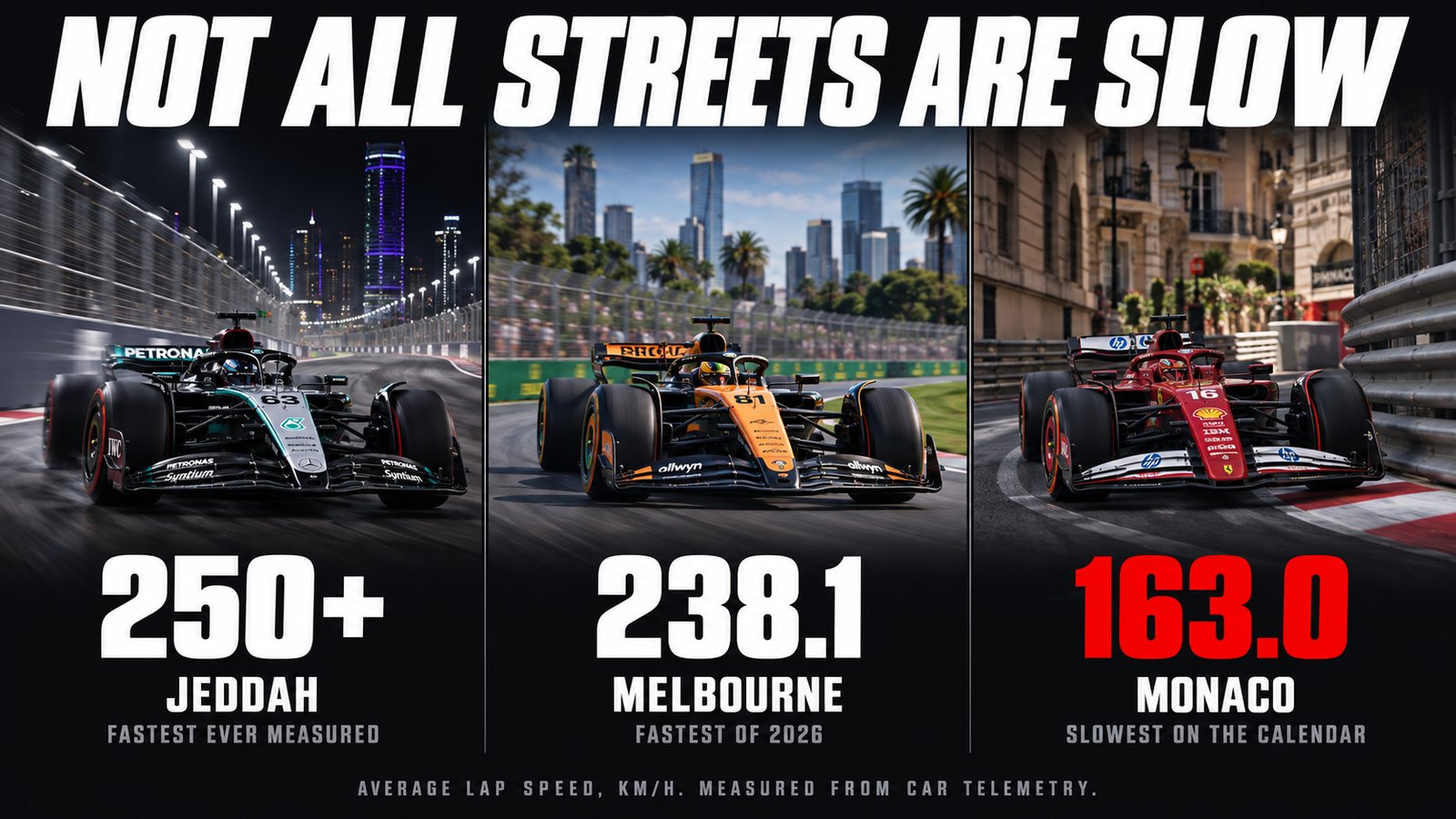
The Fastest Street Circuit in F1, Measured
Jeddah is the fastest street circuit in Formula 1, but only just. Measured on the same cars, Melbourne is 1.9 km/h behind it and Monaco is 83 km/h slower.
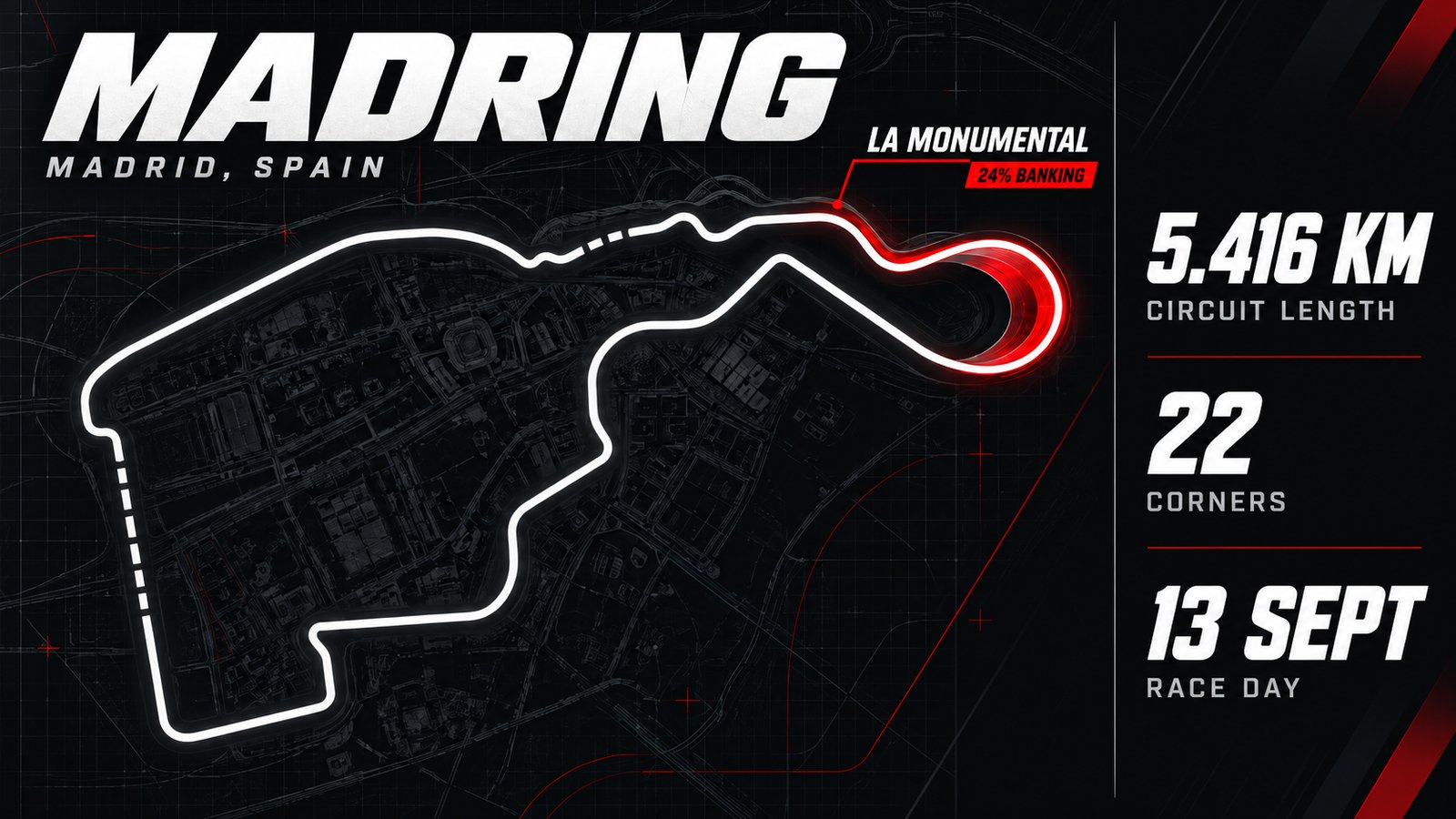
Madrid Grand Prix: The Madring Circuit Explained
F1 has now driven the Madring. We measured the first laps: 1:33.662, 204.8 km/h average, 64% full throttle, and 55 lap times deleted in two sessions.
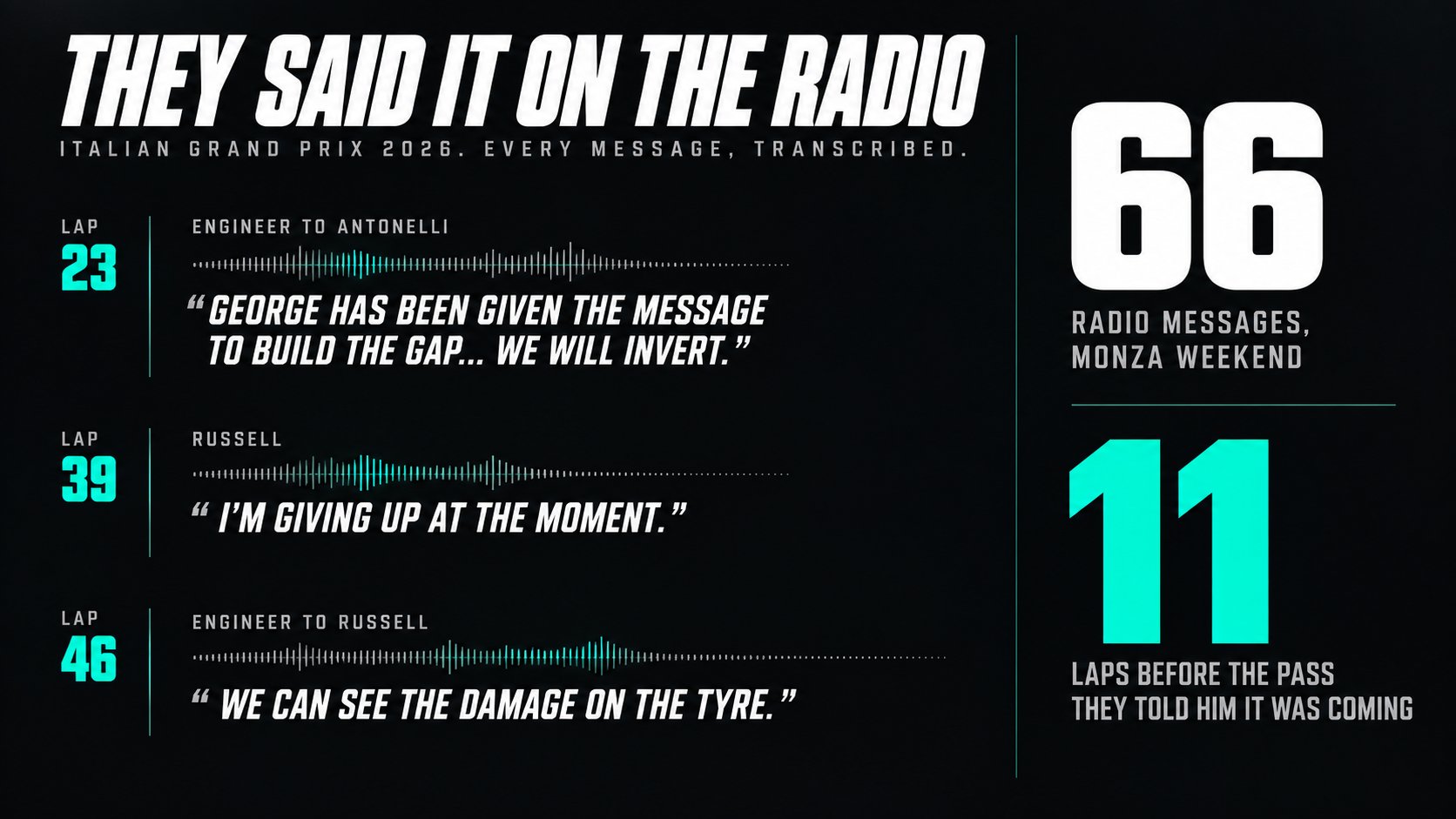
Italian GP team radio: Mercedes ran the race on the radio
Mercedes swapped their drivers twice, told Russell eleven laps early that Antonelli was forecast to catch him, and then told both cars the same thing one minute apart.
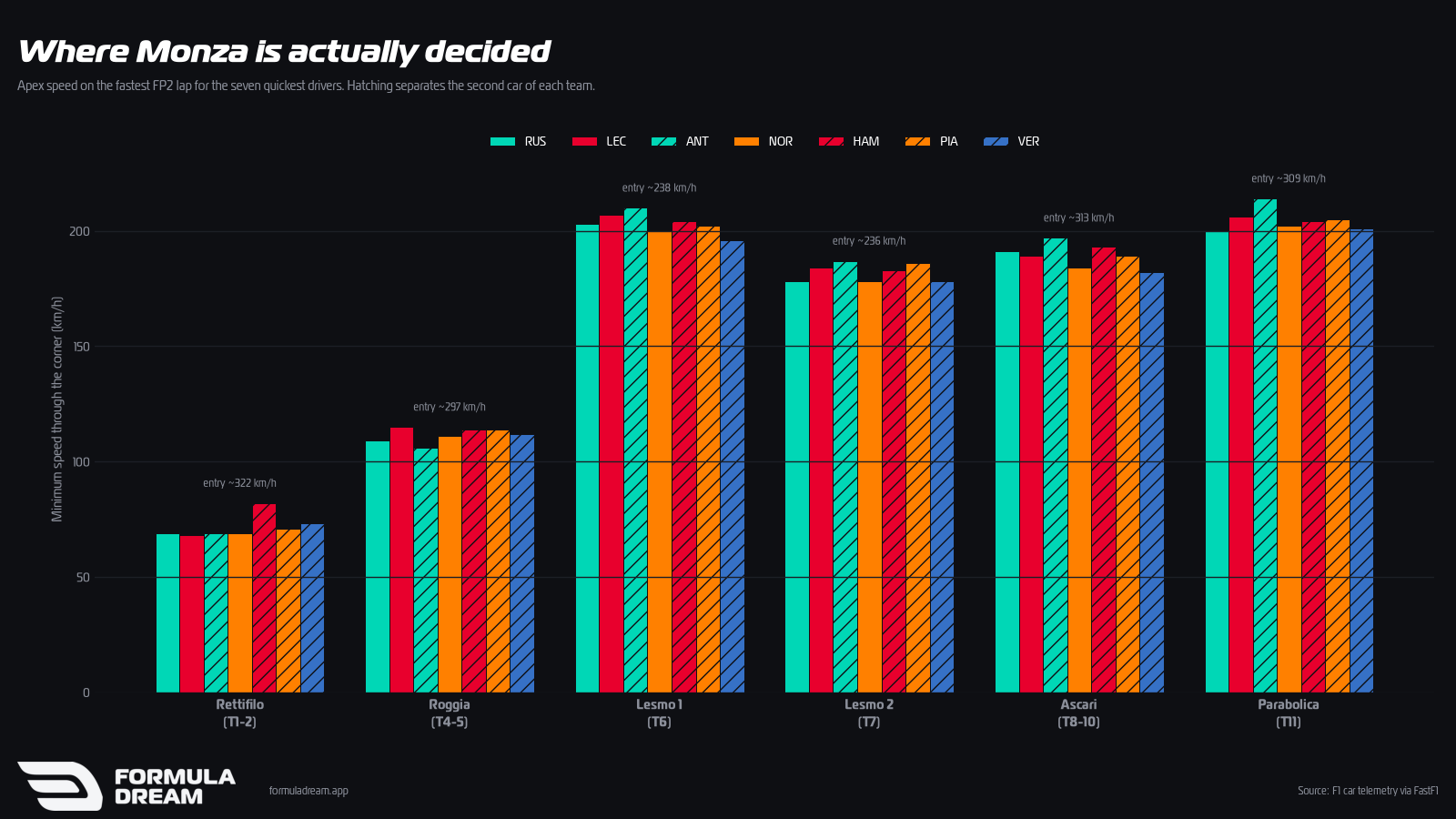
Monza Telemetry: What 1,163 Laps of Practice Data Show
We pulled the car telemetry from both Italian GP practice sessions. Corner speeds, a 251 km/h braking event, and the first Monza Friday without DRS.
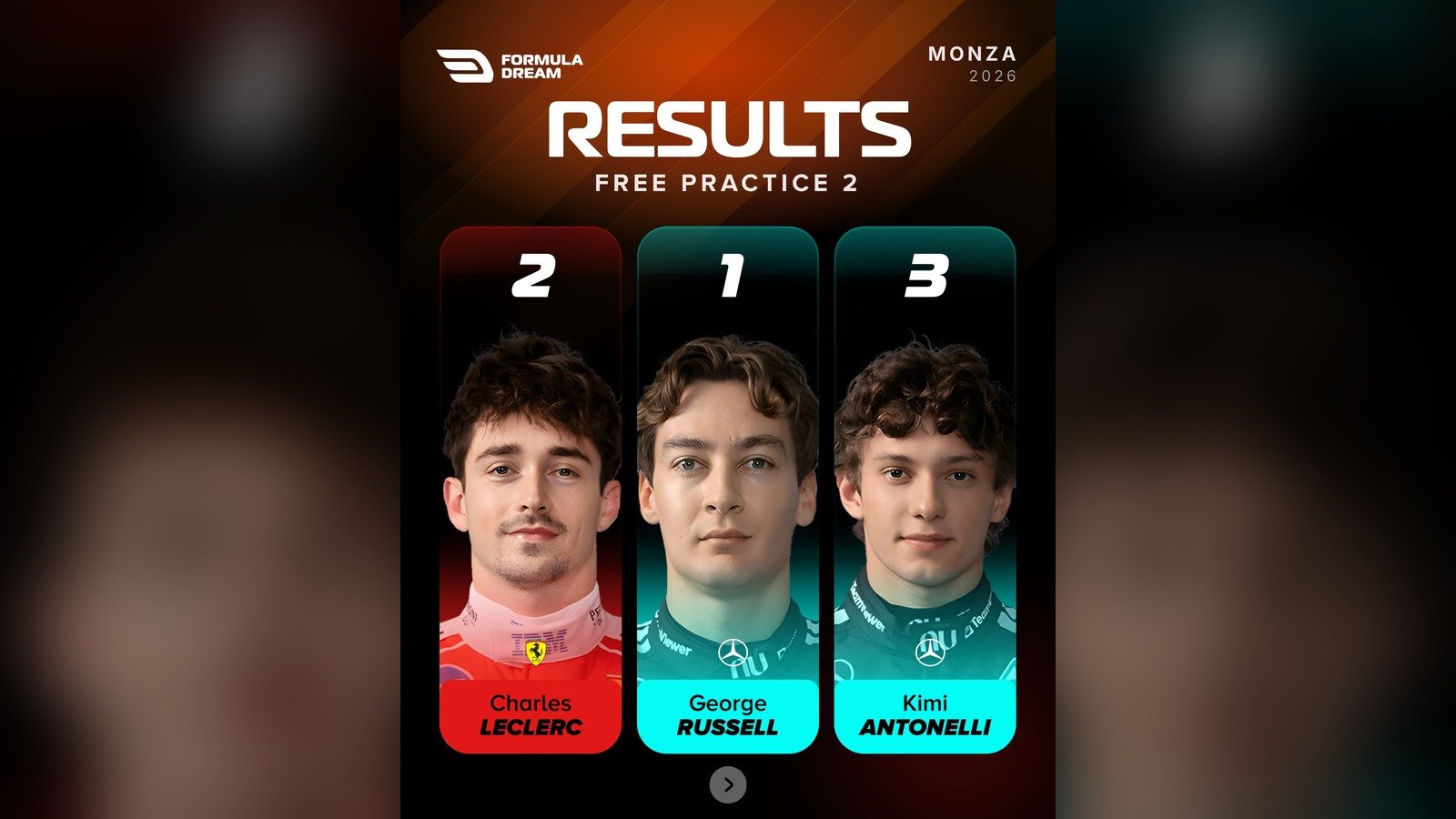
Italian GP FP2 Results: Russell Leads a Mercedes Front Row Threat
George Russell topped FP2 at Monza with a 1:22.559, and Mercedes backed it up with the best long-run pace in the field. Full results, race pace and telemetry.
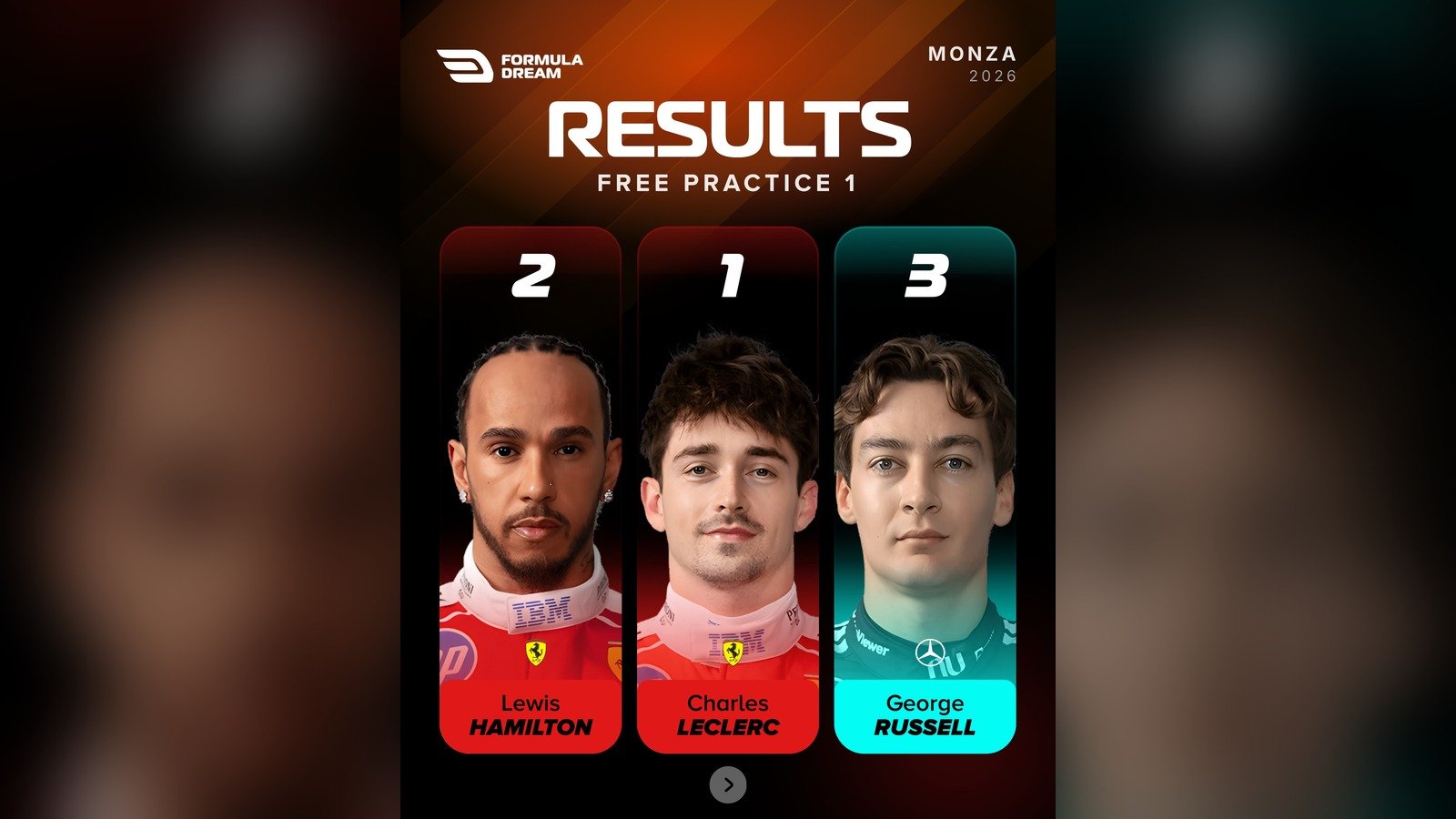
Italian GP FP1 Results: Leclerc Leads a Ferrari 1-2 at Monza
Charles Leclerc topped first practice at Monza with a 1:23.008, and he did it on the medium tyre while the cars behind him were on softs. Full results and telemetry.

Retired F1 Numbers: There Is Only One
Formula 1 has retired exactly one number, and it is 17. The others people assume are gone, including 27 and 13, are all still available.
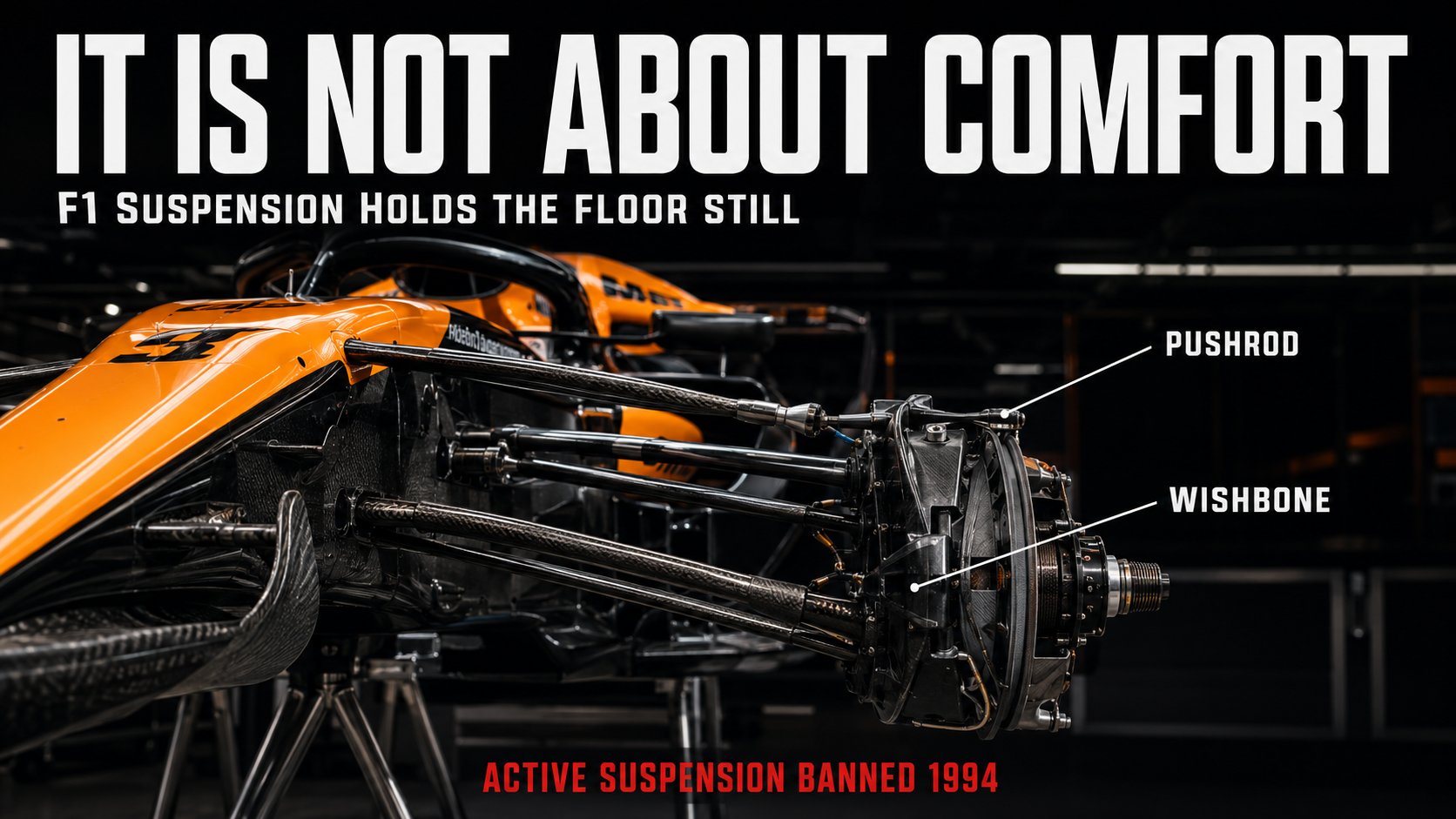
F1 Suspension Explained: It Exists to Serve the Floor
F1 suspension is not really about ride comfort or mechanical grip. Its main job is holding the floor at a constant height so the aerodynamics keep working.
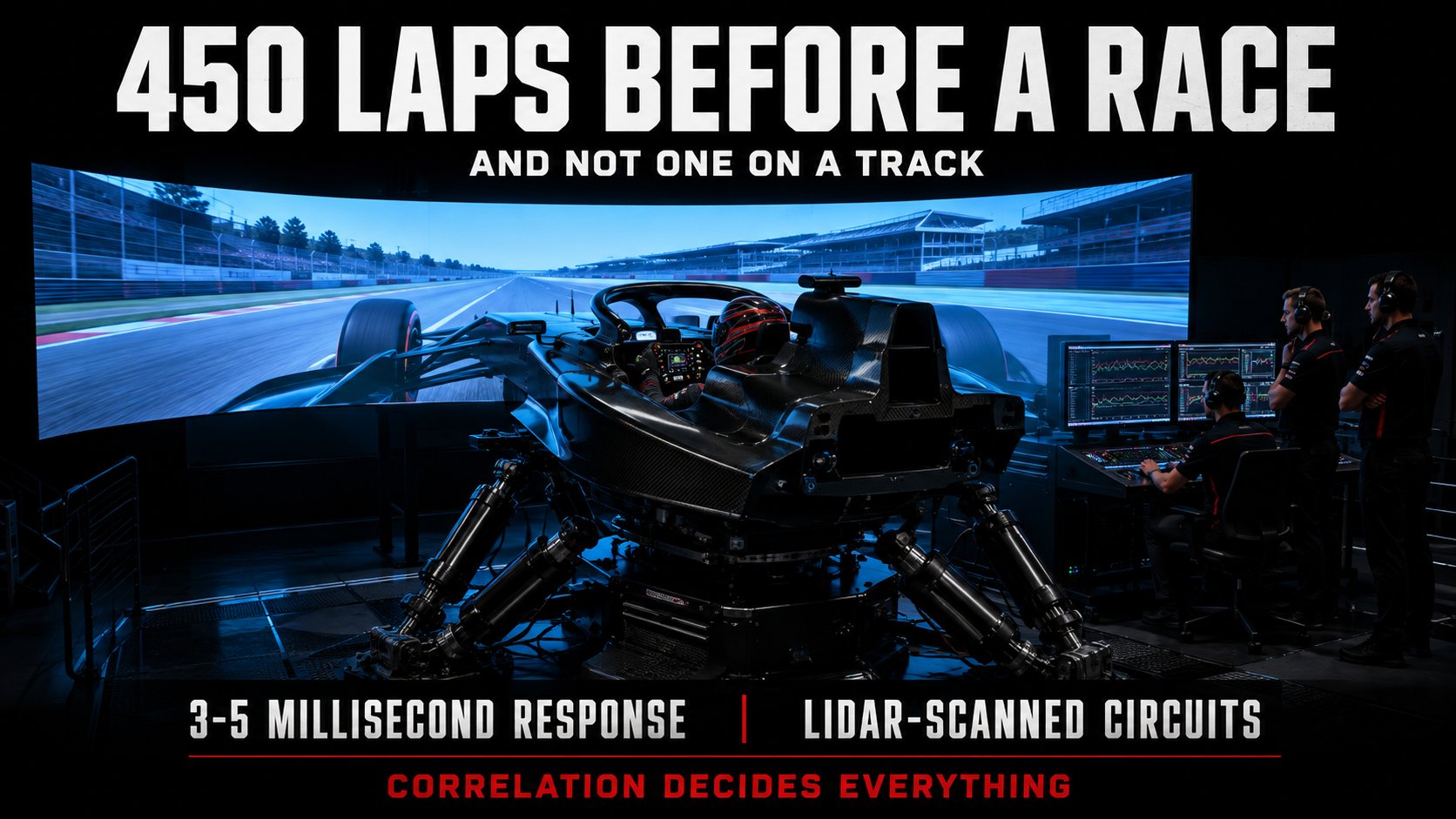
How F1 Teams Actually Use Simulators
A team simulator is a lidar-scanned virtual test track on a motion platform that responds in milliseconds. Its value depends entirely on one unglamorous thing: correlation.
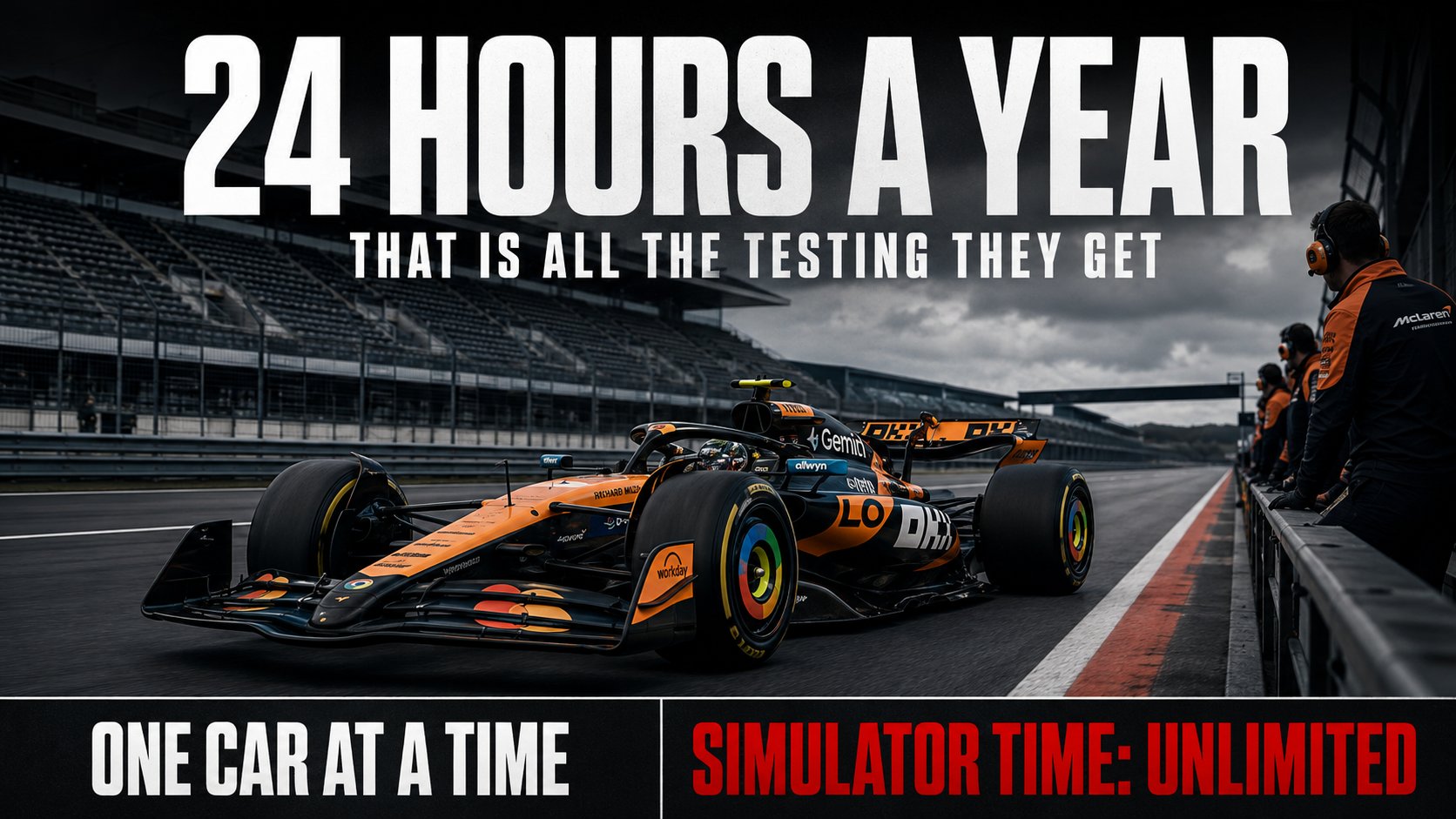
Why F1 Teams Barely Get to Test, and What They Do Instead
Track time is rationed to a handful of hours a year, one car at a time. Simulator time is unlimited. That single asymmetry explains how modern F1 teams are built.

How F1 Moves a Grand Prix Around the World
Around 1,200 tonnes of freight, up to seven 747s an event, 300 trucks across Europe and 120 ocean containers in permanent circulation. The hardest job in the sport.