Who Owns F1? The FIA, Liberty Media and 2110 | Formula Dream
Guides
Who Owns Formula 1? The FIA, Liberty Media and the 100 Year Deal
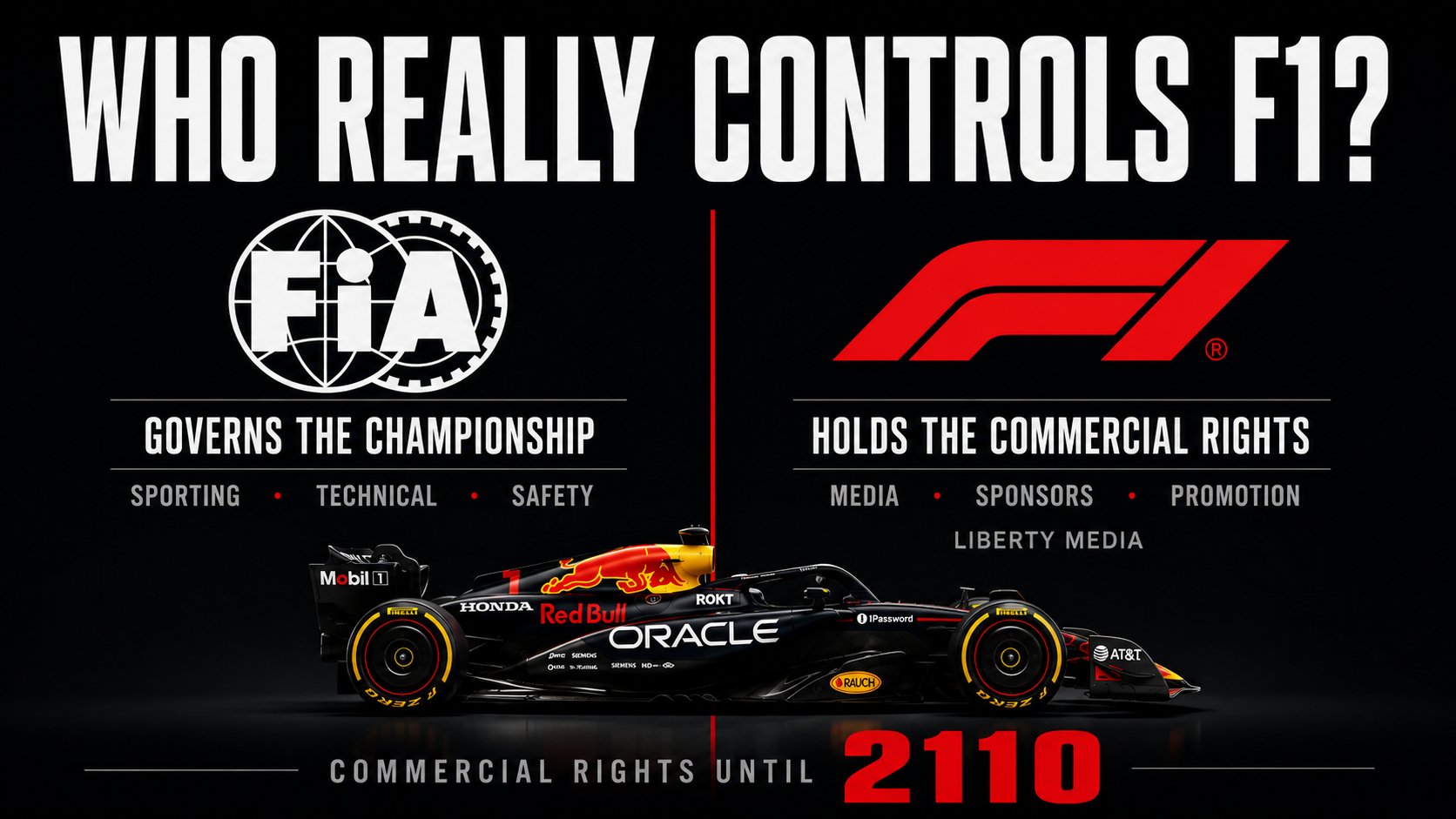
The FIA owns the championship. Liberty Media owns the right to make money from it, on a lease that runs to 2110. The split explains most arguments in the sport.
Formula 1 has two owners, and confusing them is the source of most misunderstandings about how the sport works.
The FIA owns the Formula 1 World Championship. It is the governing body, it writes the rules and it runs the racing.
Liberty Media owns the commercial rights, which it bought in January 2017 in a deal valuing Formula 1 at about $8 billion including debt, under an agreement that runs for 100 years, to 2110
So the FIA owns the sport and Liberty owns the business. Nobody involved has to agree with the other about anything except what the contract says, which is why so many disputes in F1 end up being about governance rather than racing.
What the FIA controls
The Fédération Internationale de l'Automobile is the governing body for world motorsport, not a Formula 1 company. F1 is one of many championships it sanctions.
Nobody owns the FIA in the usual sense. It is a non-profit association, founded in 1904 and based in Paris, that brings together 244 motoring and sporting organisations from 146 countries, and those members elect its president. Mohammed Ben Sulayem was re-elected in December 2025 for a second term, running to 2029.
Its authority covers:
The technical regulations, which decide what a car may be. The 2026 rules reset was an FIA decision.
Officiating. Race control, the stewards and the documents they publish.
Safety and licensing, including the Super Licence that permits a driver to compete at all.
Policing thecost cap and the technical checks that catch a car outside the rules.
What it does not have is a financial stake in the commercial income. It sold that.
What Liberty Media controls
Liberty Media is a US company, and today its business is motorsport. It bought 84% of Dorna Sports, the owner of MotoGP's commercial rights, in July 2025, and in December 2025 it split off its other holdings, leaving Formula 1 and MotoGP. Through Formula 1 it holds the commercial rights, which is the right to make money from the championship.
That covers:
Hosting, staging and promoting each race, including the deals with circuits that decide which countries hold a Grand Prix.
Licensing the brand, including everything using the Formula 1 name.
Sponsorship at championship level, distinct from the deals teams sign themselves.
The most consequential part for the teams is that Liberty controls the revenue that gets shared out. How much reaches a team, and on what basis, is covered in how F1 prize money works.
Where the arrangement came from
The split is not a modern invention. It dates to Bernie Ecclestone.
Ecclestone set up Formula One Promotions and Administration in 1987, when the second Concorde Agreement was signed, to manage the sport's television rights. It later became Formula One Management. The essential move, over years, was to consolidate the sport's scattered commercial arrangements into one entity, and then to secure the commercial rights from the FIA on a long lease.
That lease was agreed on 28 June 2000, when the FIA's member clubs voted in Geneva to grant the commercial rights for 100 years, to 2110, for a reported $360 million.
That lease is why Liberty's position is so secure. Buying F1 in 2017 was not buying the championship, it was buying a contract with 93 years still to run.
The document that binds it together
The FIA, the commercial rights holder and the teams are held together by the Concorde Agreement, a confidential contract that sets out who makes the rules, how revenue is divided, and what the teams commit to in return.
The current version, signed by all the teams, runs from 2026 to 2030. It is the reason F1 governance moves slowly. A change of any significance needs agreement across three parties with genuinely different interests: a regulator concerned with safety and sporting integrity, a commercial owner concerned with audience and revenue, and ten or eleven teams concerned with their own competitiveness. The detail is in the Concorde Agreement explained.
Why the split explains so much
Once you know who owns what, several recurring stories make more sense.
Why the calendar keeps growing and moving. Race hosting is a commercial decision, not a sporting one. New venues appear where promoters will pay, which is a Liberty judgement about audience and revenue.
Why rule changes take years. Regulations are an FIA matter, but they affect the commercial product, and both sides plus the teams have to sign up. Nobody can simply impose a change.
Why a new team is so hard to add. An eleventh entry dilutes the revenue share, which is a commercial question for the existing teams, and it needs a sporting approval too. That is why Cadillac's arrival for 2026 came with a reported $450 million anti-dilution fee, shared between the ten existing teams, as explained in how F1 teams make money.
Why the FIA publishes so much. Its authority is regulatory, and regulatory authority depends on being seen to apply rules consistently, which is why every stewards' decision arrives as a public document.
Who owns the teams?
Separately again. The teams are their own businesses with their own owners: manufacturers like Ferrari and Mercedes, energy drinks companies, private investors, and now General Motors through Cadillac.
Owning a team gives you no ownership of the championship and no share of the commercial rights beyond what the Concorde Agreement allocates. It buys you a seat at the table, not the table.
Follow the sport all three of them run
The regulator's decisions, the commercial product and the racing itself all arrive in the same place: the weekend.
The Formula Dream app runs a live Dashboard through every session, with every car on the circuit map and a timing tower carrying lap times, gaps, intervals, tyre compound and age, plus flag and safety car alerts as race control calls them. It also collects every FIA document of the weekend as it is published, which is the governing body's side of this arrangement in raw form, and carries live driver radio as it is broadcast.
Free, no subscription, no ads, independent. Not affiliated with Formula 1.
Two organisations own different things. The FIA owns the Formula 1 World Championship as its governing body, and Liberty Media owns the commercial rights, which it bought in 2017 in a deal valuing F1 at about $8 billion, under an agreement running to 2110.
What is the difference between the FIA and Liberty Media?
The FIA writes the technical and sporting regulations, runs race control and the stewards, and handles safety and licensing. Liberty Media promotes the races, sells the broadcasting rights, licenses the brand and manages championship sponsorship.
How much did Liberty Media pay for F1?
The deal, completed on 23 January 2017, valued Formula 1 at about $8 billion including debt, and about $4.4 billion in equity. Liberty paid $4.7 billion at closing, in cash and new shares. It bought the company holding the commercial rights, not the championship itself.
Who owns the FIA?
No one, in the usual sense. The FIA is a non-profit association of 244 motoring and sporting organisations from 146 countries, and those members elect its president. Mohammed Ben Sulayem was re-elected in December 2025 for a second term to 2029.
Does Liberty Media own MotoGP too?
Yes. Liberty Media completed its purchase of 84% of Dorna Sports, the commercial rights holder of MotoGP, on 3 July 2025. Dorna's management kept the other 16%.
Does the FIA make money from Formula 1?
Not from the commercial rights, which it sold. Its role is regulatory, and its income comes from elsewhere, including entry fees and the wider motorsport activities it governs.
Who decides where F1 races?
Liberty Media, as the commercial rights holder, negotiates with circuit promoters over hosting. The FIA must approve a circuit's safety and homologation, but the choice of venue is a commercial decision.
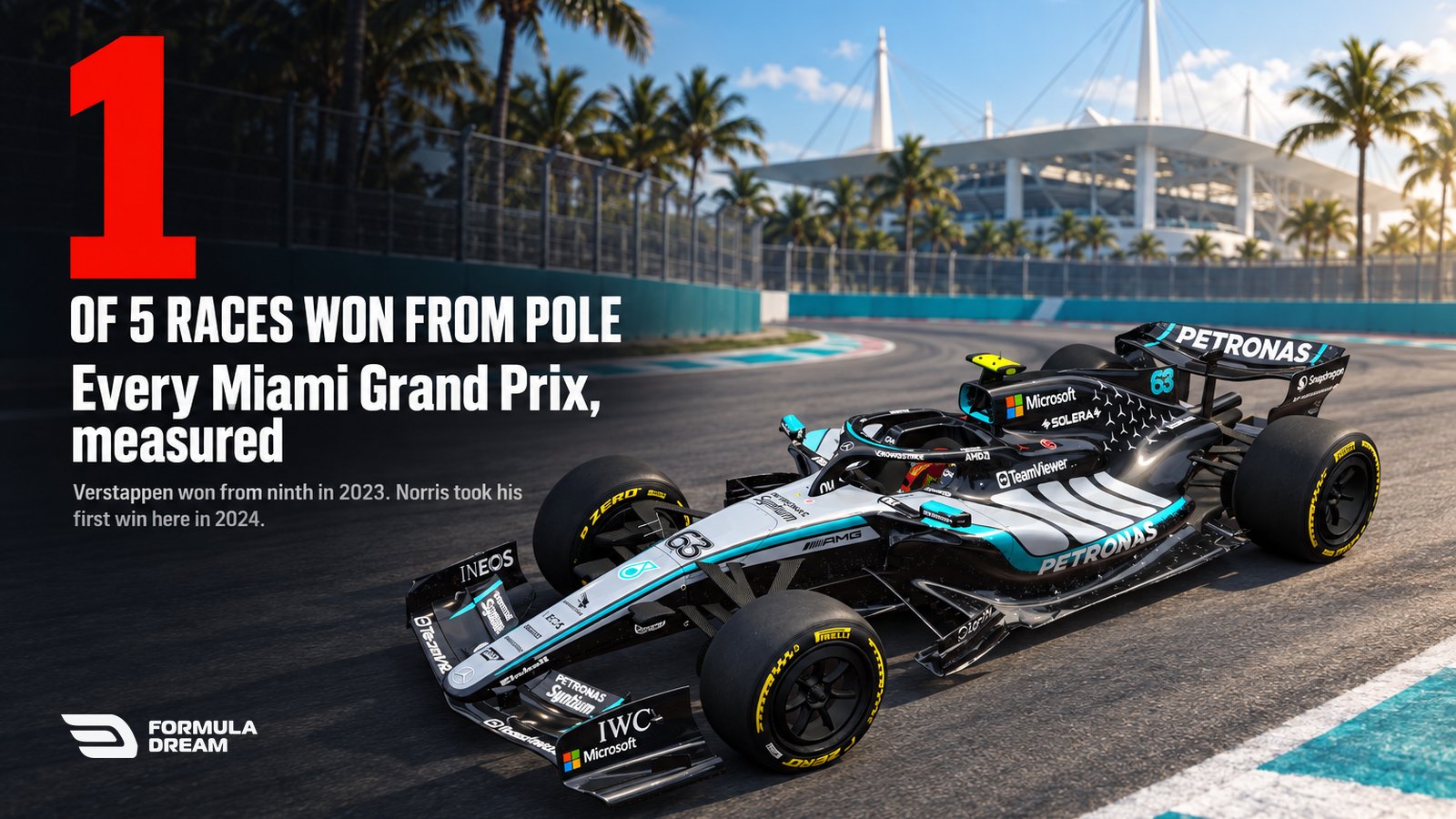
Every Miami Grand Prix winner, measured: five races, and pole has won only one of them
Five Miami Grands Prix have been held since 2022, and only one was won from pole: Kimi Antonelli's in 2026. Max Verstappen won from ninth in 2023, and Lando Norris took his first win there in 2024. Every winner, grid slot and safety car, measured.