Insights, deep-dives & race intel
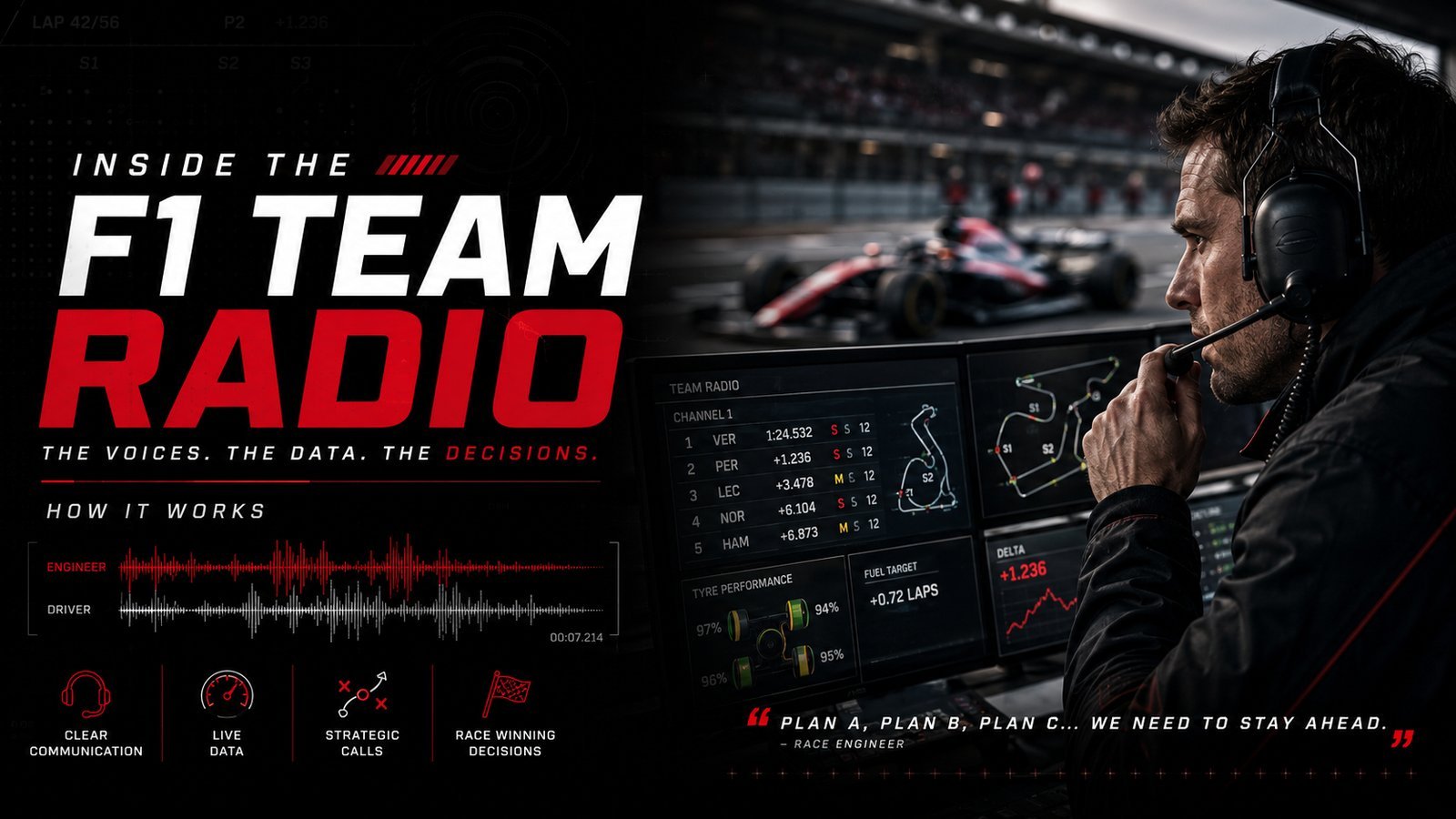
How F1 Team Radio Works: The System Behind the Messages
How F1 team radio works, the steering-wheel button, the race engineer on the pit wall, the rules on what can be said, and why you only hear a fraction of it on the broadcast. Explained, with real messages.
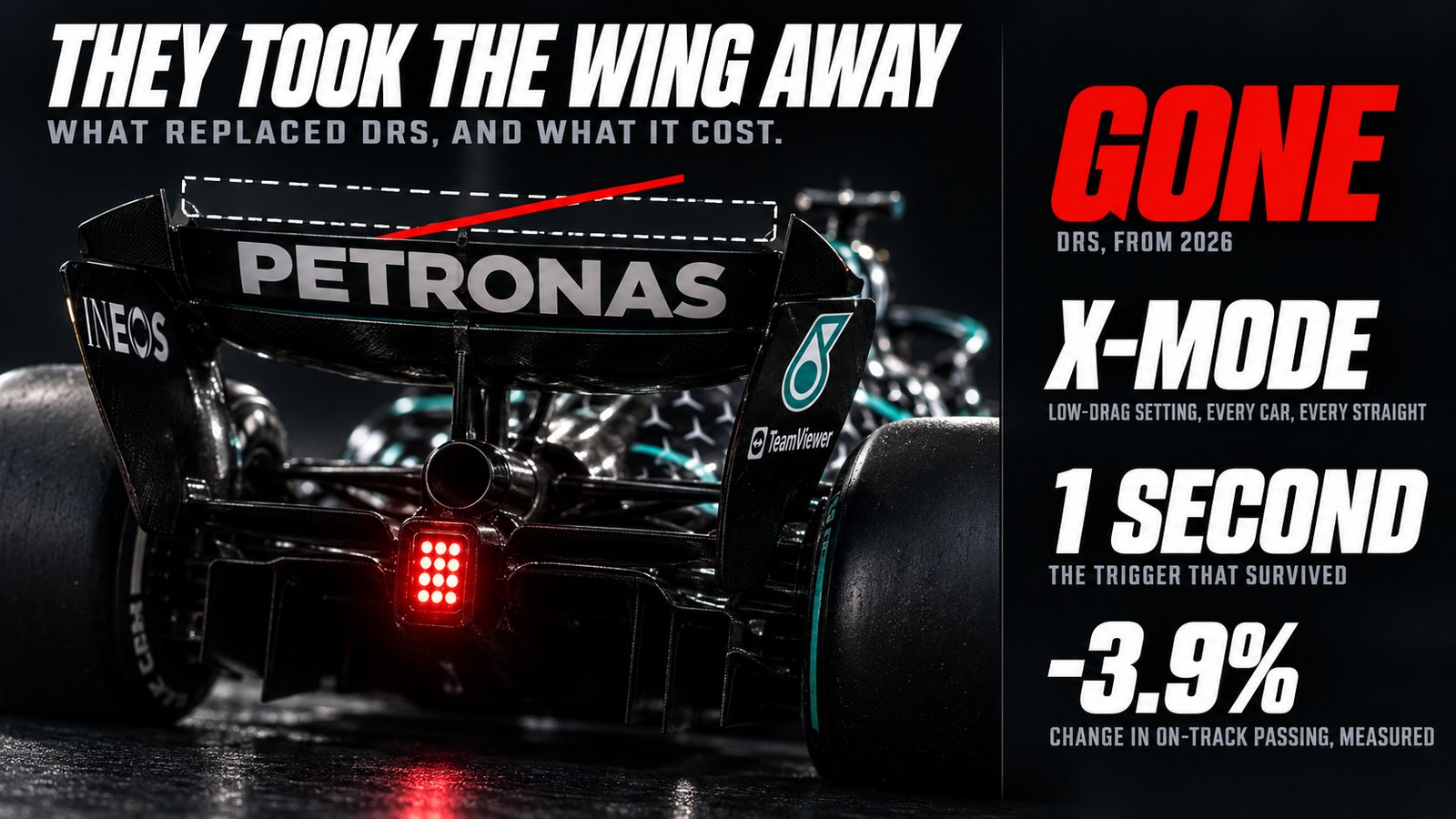
What Is DRS in F1? How It Worked, and Why It Ended
DRS, the Drag Reduction System, lets an F1 driver open a flap in the rear wing on designated straights to cut drag and gain speed, making overtaking easier. Here is how it works, the rules, and what changes in 2026.
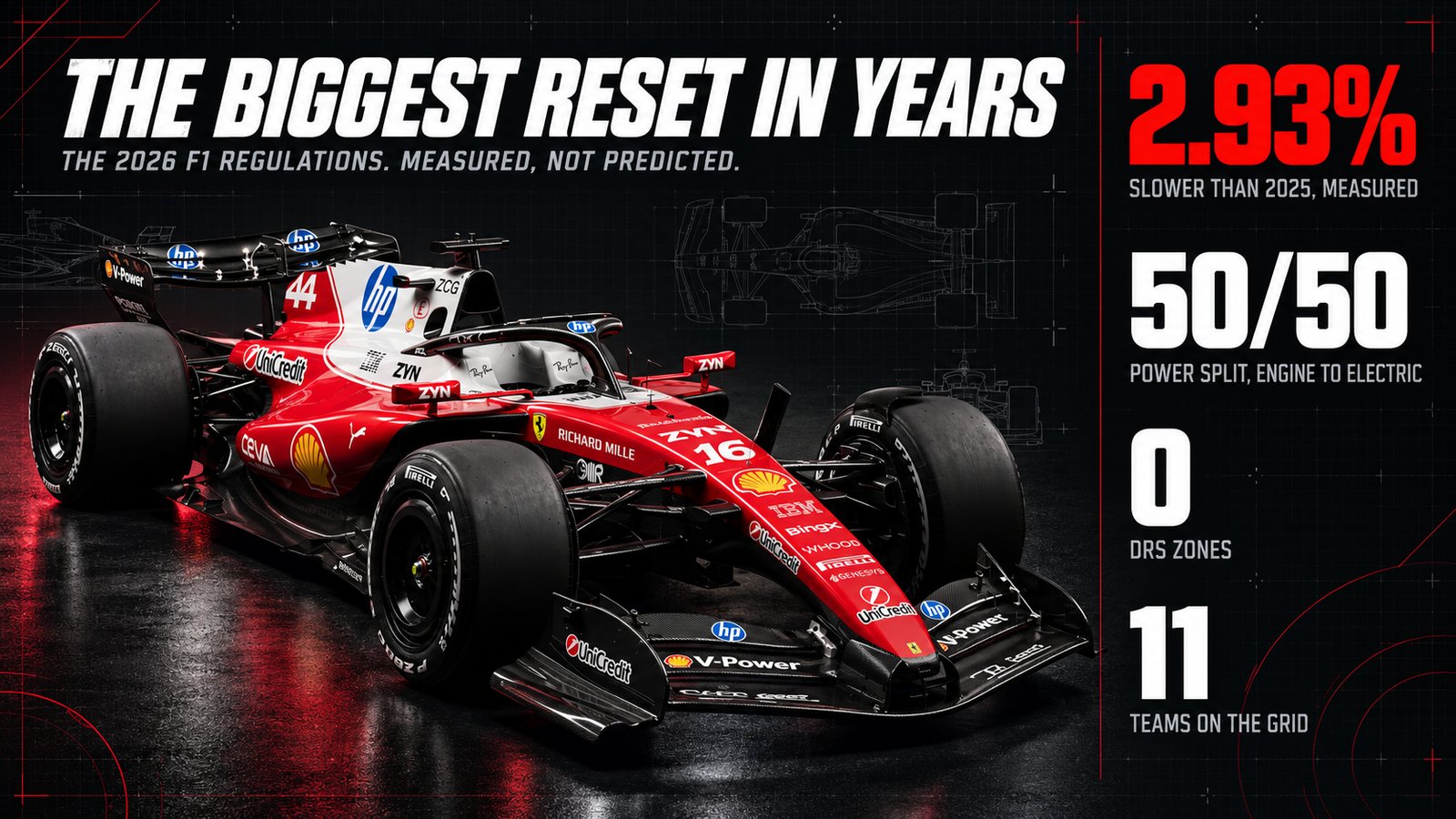
The 2026 F1 Regulations Explained: Everything That's New
New power units with a roughly 50/50 split of engine and electric power, active aerodynamics, the end of DRS, smaller and lighter cars, and 100% sustainable fuel. Here is everything that changes in Formula 1 for 2026, explained simply.
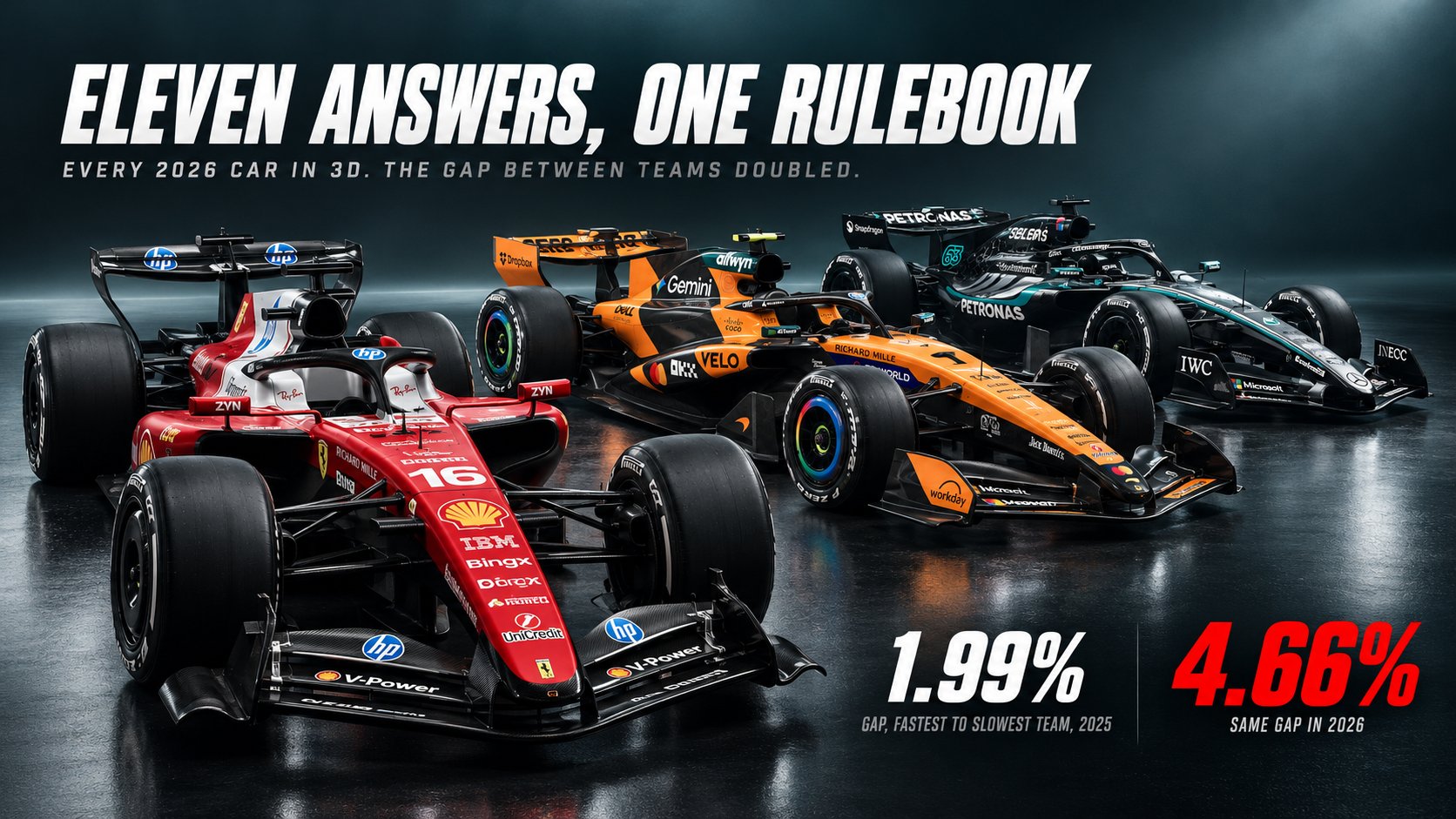
See Every 2026 F1 Car in 3D: The New-Rules Grid, Up Close
2026 is the biggest rules reset in years, and we can prove the teams disagreed: the gap between the fastest and slowest team more than doubled. Spin every car in 3D.
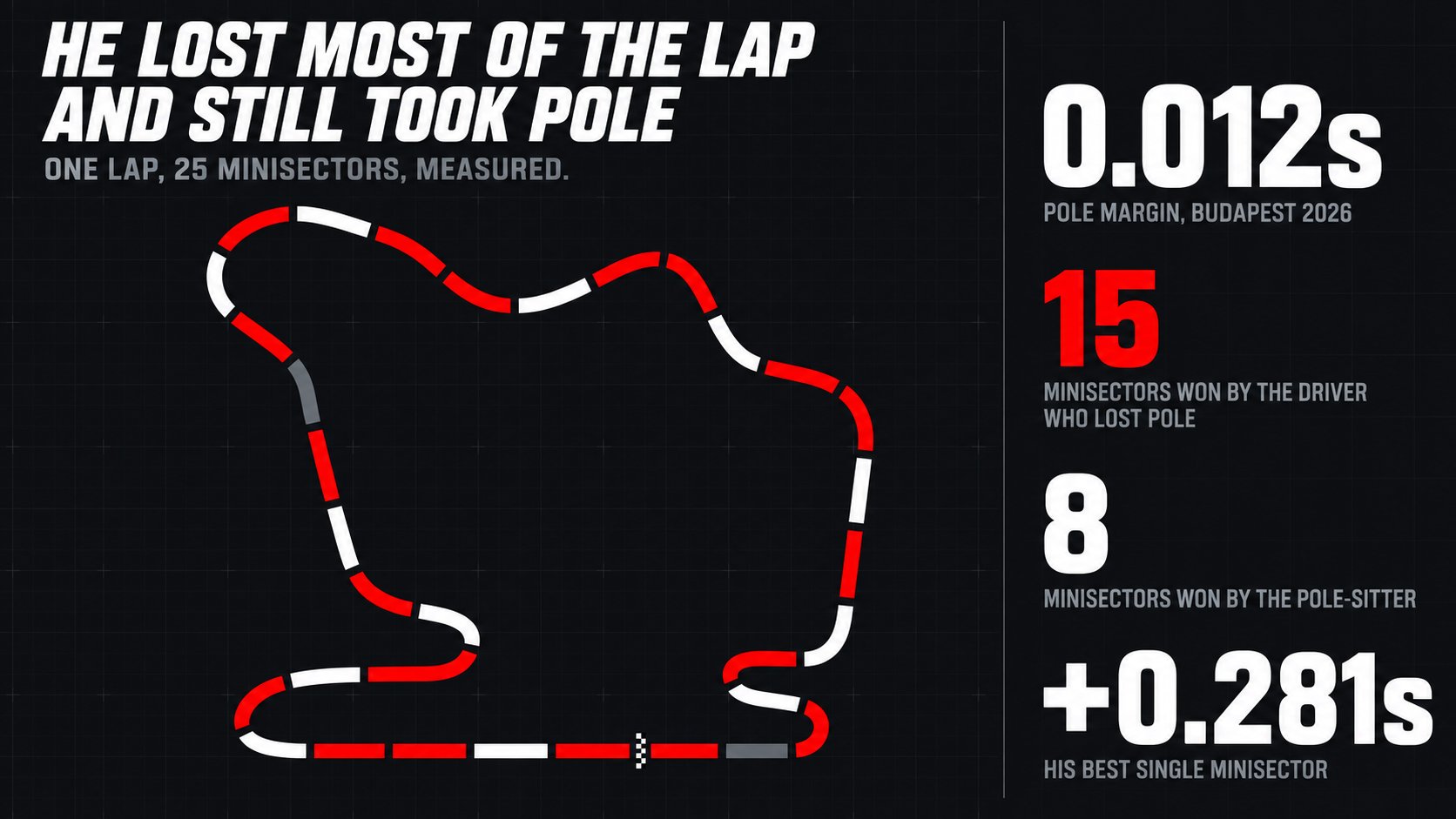
Who Owned Each Corner? Reading an F1 Lap in Minisectors
We split the three closest poles of 2026 into 25 minisectors each. Twice, the driver who took pole was faster in fewer of them than the driver he beat.
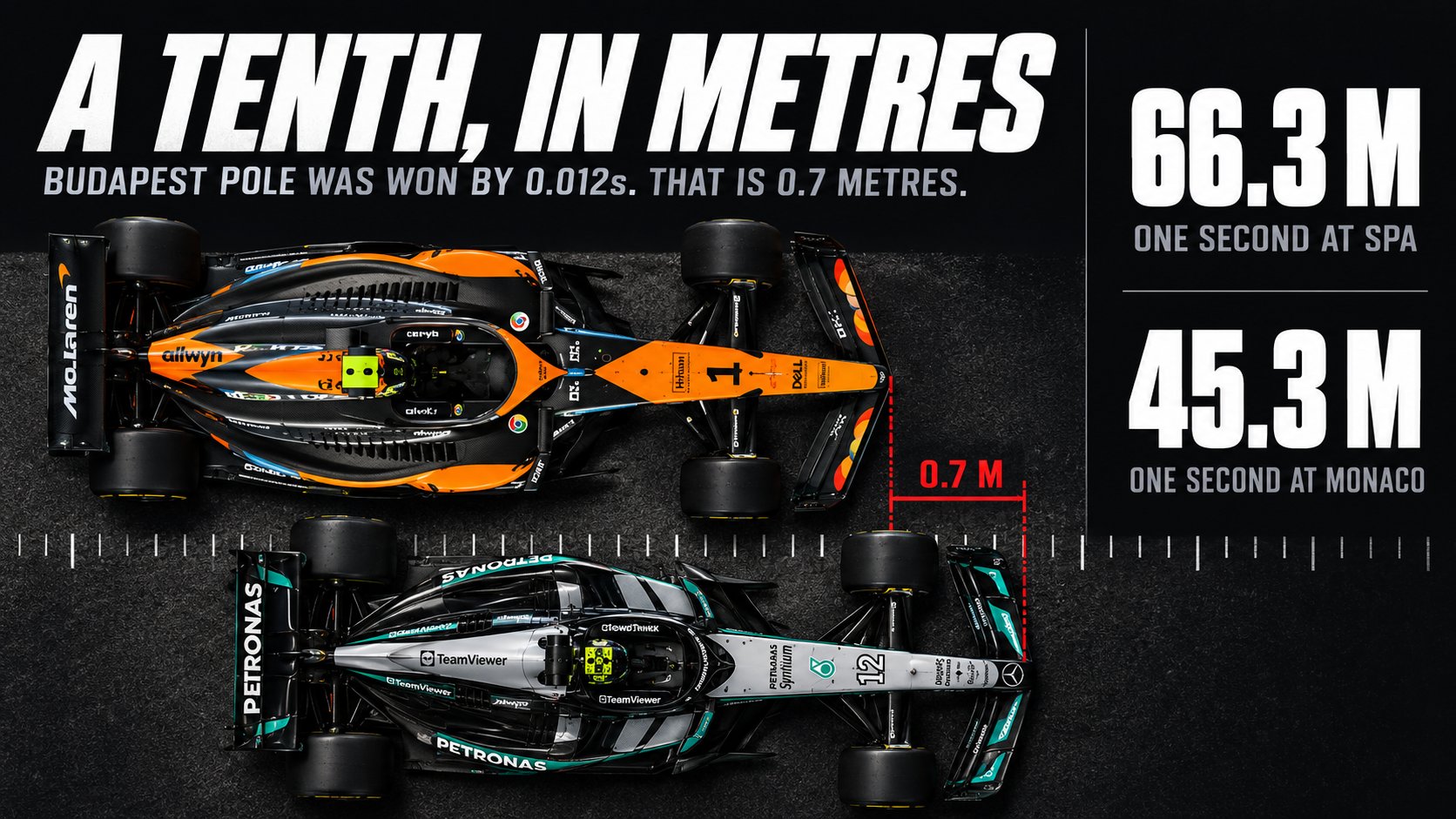
How We Turned F1 Time Gaps Into Metres of Racetrack
A gap like +0.012s is impossible to picture. We converted every 2026 qualifying gap into real distance, and one second turns out to mean 66 metres at Spa and 45 at Monaco.
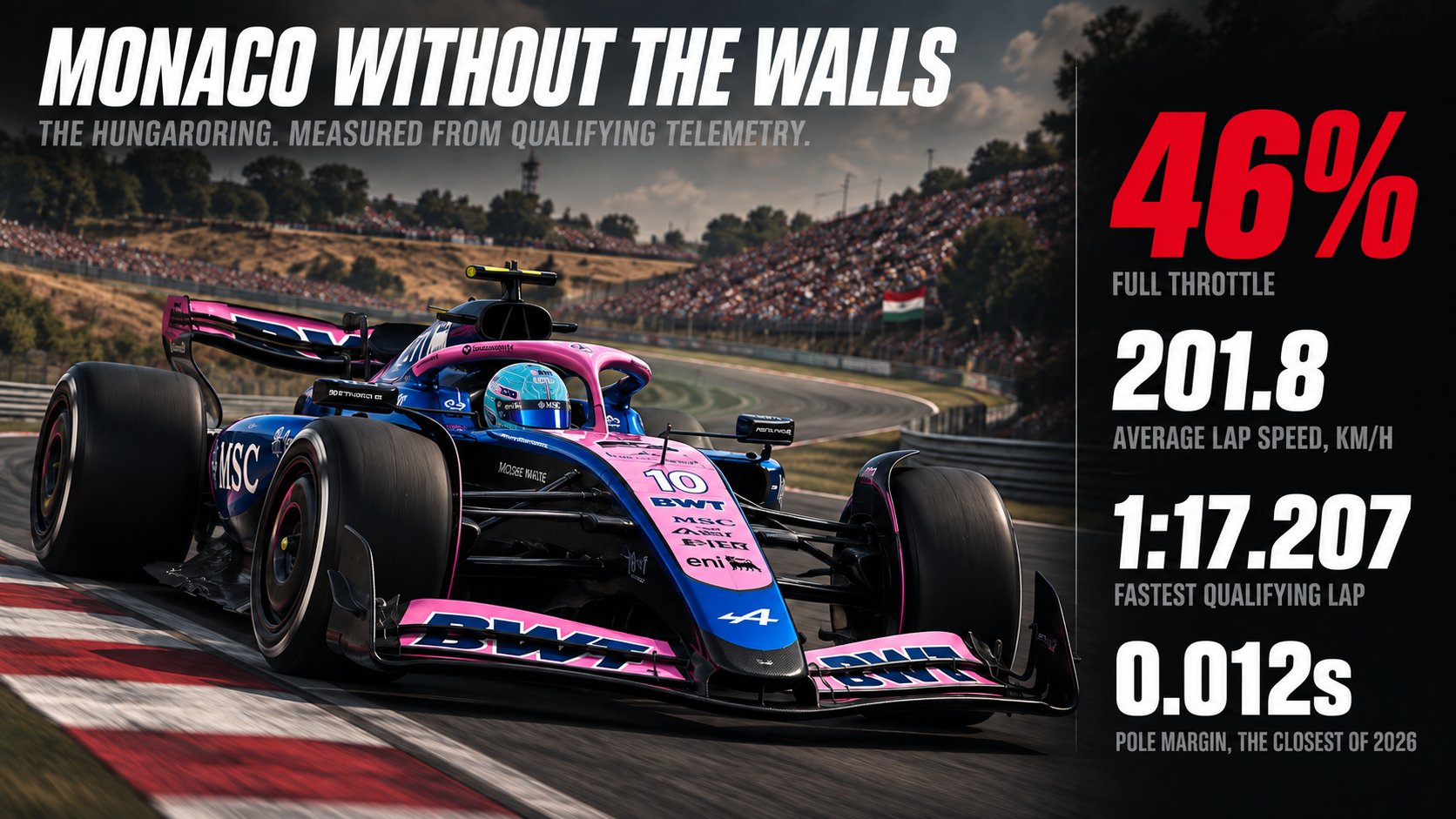
Hungarian Grand Prix: Nine Braking Zones and One Place to Pass
The Hungaroring packs 14 corners into 4.4 kilometres and gives a driver one real overtaking opportunity. Here is the whole lap from real telemetry, and why Leclerc's pole did not win the race.
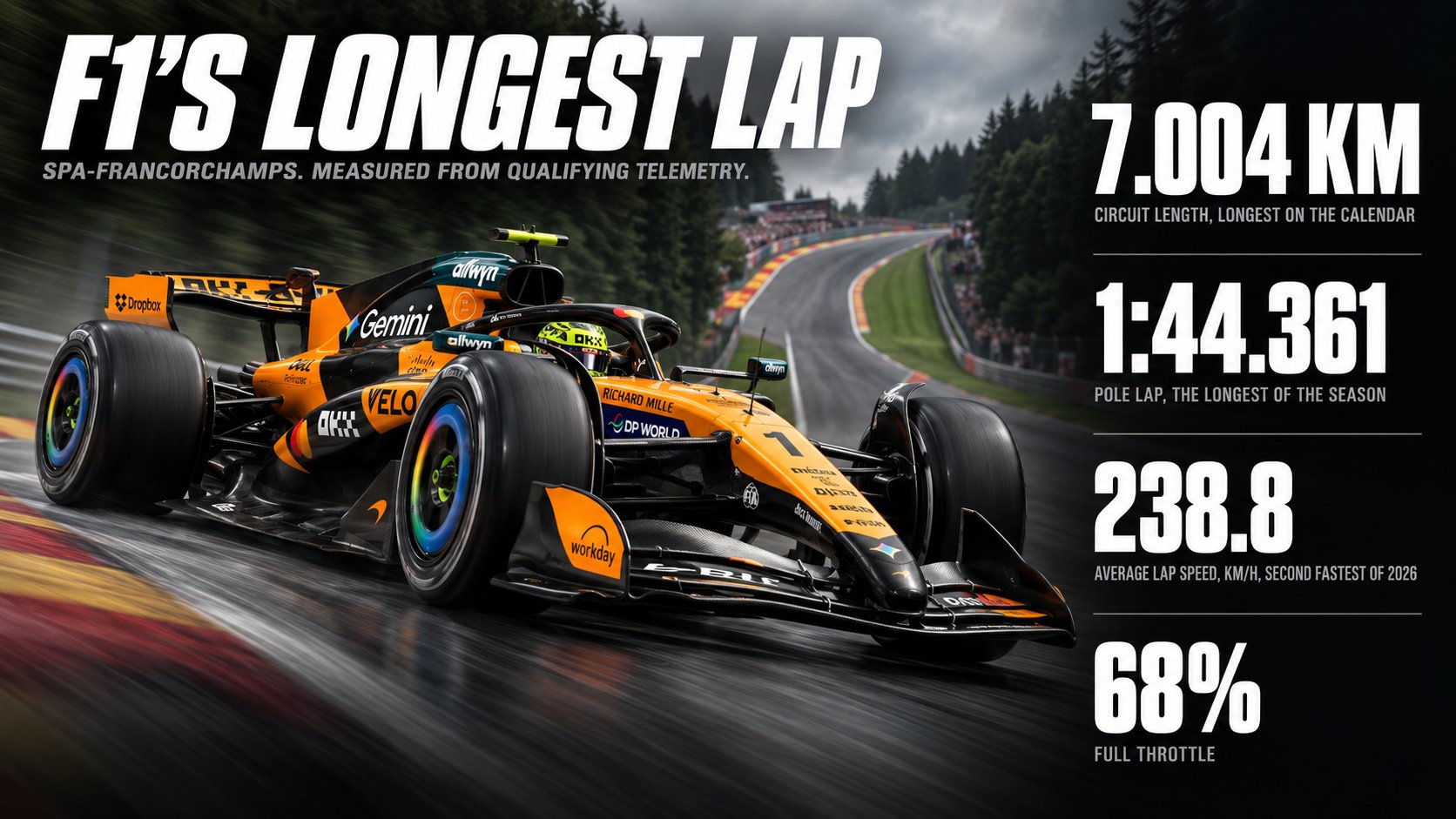
Belgian Grand Prix 2026: Track Analysis
Spa is seven kilometres long and a driver brakes just six times. Here is the whole lap, corner by corner, from real telemetry, and the one braking zone that decided pole last year.